Twilight Veil emblemTwilight Order
Start Reading
✦ Twilight Order ✦ Celestial & Master Codex · unified edition v27
Prequel Cycle · Eleven Novels · Deep Timeline

The Deep Timeline Cycle

Eleven prequel novels, from the Void before the first star to the night the capital rang · October 16, 2026

How to Read This Cycle

Eleven prequel novels cover the Deep Timeline in order, from the Void before the first star to the night an eleven-month-old rang a kingdom like a bell. Books III and IV run in parallel (the Kynari and the Saurai sides of the Great Shift); every other book ends before the next begins, and the last one ends on Riven’s clock. Together they are the history the present-day cast walks into without knowing.

Three rules hold the cycle together:

Rule One

No prophecy, no engineering.

Per the Great Shift codex, nobody arranged the Twilight Order. These books show how the inheritances formed; they never show anyone planning the cast.

Rule Two

Every book earns one canon lock.

Each novel is built to pay off one thing the Master Codex already states as fact (the Nomad Oath, the Jackals’ founding, the Pale Choir violation) and to leave it exactly where the codex found it.

Rule Three

Different peoples, same fight.

Each book is told from inside one culture of the Atlas of the Eight Peoples, so the cycle doubles as the realms’ lore bible in story form.

Book Zero. Book Zero (Riven: Ash Before the Eclipse, v3.1) stays the keystone. This cycle is the staircase down to it. A new reader can enter at Book XI and read backward; a completist reads I through XI, then Book Zero.

The Cycle at a Glance

Book I

Unblooded

The Permission · The Void Age, braided with the making of the Kynari
Book II

The Open Hand

The Open Hand · The Elohim arrive; the Blessing of Passage; the Seed Covenant
Book III

Inheritance

Inheritance · The Great Shift, Kynari side
Book IV

Continuance

The Continuance · The Great Shift, Saurai side (parallel to III)
Book V

Hollow

The Expedition That Did Not Starve · The Ashcroft Crossing; the Hollow Family is born
Book VI

Titanfall

When Every Door Opened at Once · The War of Ascension and Titanfall
Book VII

Crossroads

No Road Belongs Only to Kings · The Restoration Covenant; the Nomads form
Book VIII

The Walking Star

The Walking Star · The First Eclipse War; the Gilded Jackals founded
Book IX

Red Autumn

A Name Is Only a Handle · The King Who Fed; the Red Autumn
Book X

Pale Choir

The Address Is Closed · About 300 years before: the Lunari withdraw; the Crimson Divide
Book XI

Nine Sunrises

He Had Nothing We Could Steal · Khari and Amara; ends on the four-second pulse
Book Zero

Riven: Ash Before the Eclipse

Riven: Ash Before the Eclipse · The Awakening, Year 0 (v3.1, the keystone)

The ribbon is not to scale: Books I and II span eons, Book X about three centuries, Book XI one generation. Books III and IV share the Great Shift from two sides. Each other book ends before the next begins, and Book XI ends where Book Zero opens.

Full outlines. One tab per book, in timeline order. Each carries the thematic spine, the principal characters (new names are provisional until ratified), and a chapter-by-chapter outline of roughly 20 chapters in three movements. Chapter titles are working titles. In this codex each book’s full outline is folded beneath its summary.
Book IUnbloodedThe Permission
The boundary that lets shape take shape spends ten thousand years refusing a final form, while the Elohim’s first beast-folk are denied one; the two stories meet on a road when a dusty traveler removes a single limit from a frightened family.
Era
The Void Age, braided with the making of the Kynari.
People
The Three Answers; the first Kynari.
Canon lock
The Stranger’s Mercy makes Aethernox the Unblooded Ancestor of the Kynari; he takes the name Gingey and promises to keep it forever.

POV

Two strands in alternation. Aethernox, narrated in the register he adopts rather than the one he is, shrinking as the book goes on. And the first Kynari, from a hill clan reshaped by an Elohim adaptor to a failing pack led by a matriarch, growing from registry entries into a people. Luxen, the lamp, crosses both.

Shape

  • 1. The Three Answers — Three civilizations, three chapters each. The first sacrifices to him for nine hundred years; the second builds a liturgy; the third fires weapons for six days. Each answer is a sincere attempt to be honest with a being whose honesty cannot be verified. He withdraws, lonely.
  • 2. The Subtraction — Ten thousand years in forty pages: each chapter he is smaller, more fallible, more interruptible. The book’s quietest set piece is the dog.
  • 3. The False Void — Nyxarion, a theologian, counterfeits his attention and forges the Void Legion. The nine-day decision: every branch where Aethernox descends curdles. He picks up his bag. The traveler arrives at the Legion’s next target, fixes a wall, teaches children a silence game, asks the priests one question. The city holds.

Closing image

A market child insults a dusty stranger. Luxen says: take a harmless name and keep it. “Gingey,” he says. The first of Luxen’s 10,000 Incorrect Depictions is sketched in the margin of the last page.

Plants

Nyxarion as a returning antagonist; the rebuilt Void Legion; the Stranger’s Mercy (Book III) as the kind of thing this man does when nobody else will.

Full outlineSpine, principal characters, chapters

Spine

Two strands, braided. Strand A is Aethernox: the boundary that lets shape take shape, feared, worshipped and shot at, subtracting himself for ten thousand years until a dog is rude to him. Strand B is the making of the Kynari: the Elohim’s adaptation programs produce beast-folk, the beast-folk have children, and the children change faster than identity, fertility or Anima can hold. The strands are the same story told at two scales: a god refusing a final form, and a people being denied one.

They converge at the Stranger’s Mercy, which is Gingey’s origin as the Unblooded Ancestor and the Kynari’s origin as a people. He remembers helping a frightened family because nobody else was going to. They build a religion on it. The False Void and the Name follow as the book’s last movement, so that the reader meets “Gingey” only after watching what he did when he had no name at all.

The prose shrinks with him in Strand A. Strand B grows: from registry entries to a people with a voice.
Principal characters

Aethernox
Gingey / Aethernox — Established codex reference
Gingey / AethernoxEstablished codex referenceCODEX1-03
Strand A · The Void; never fights; never lies
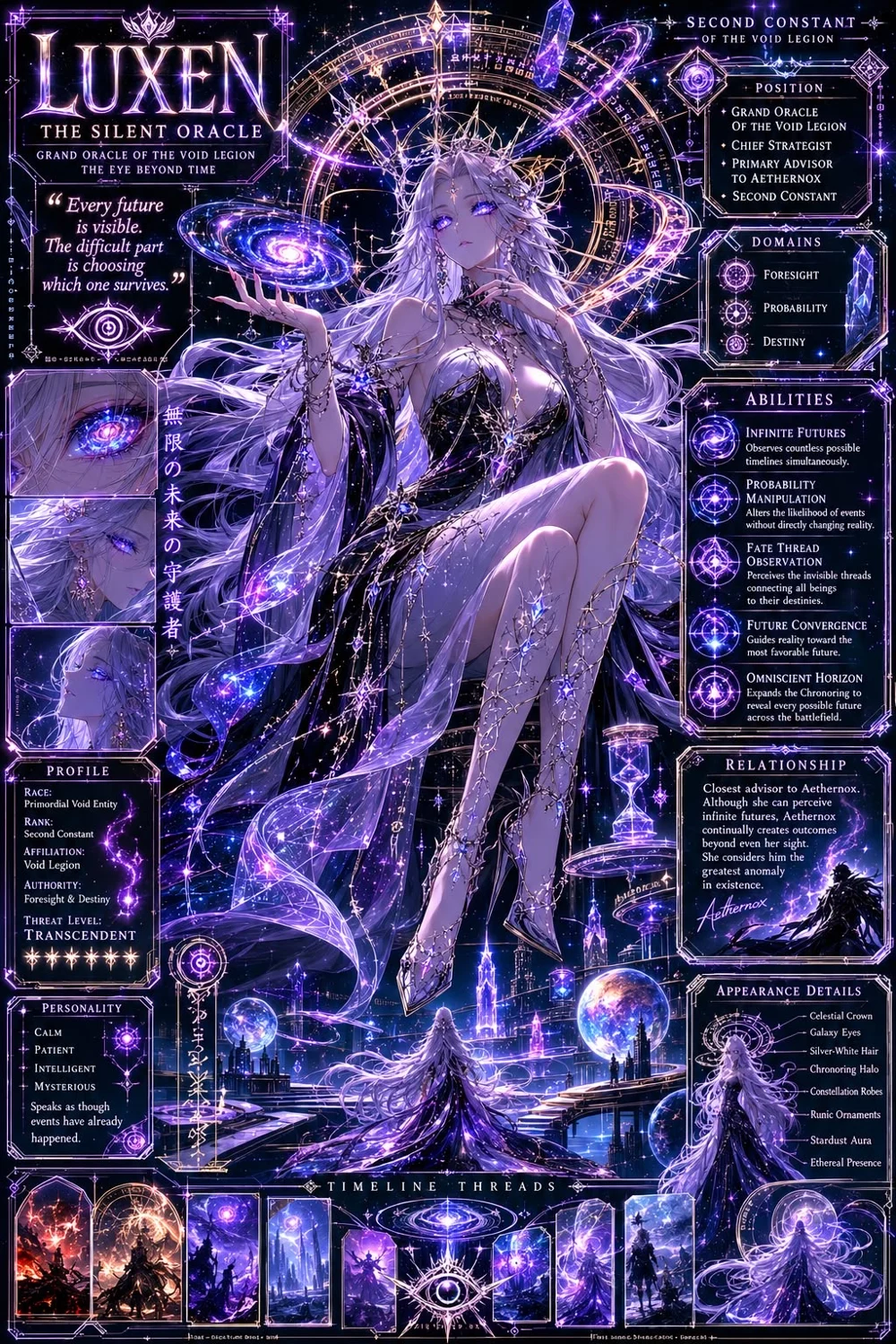
Luxen
Luxen — Original named Luxen artwork
LuxenOriginal named Luxen artworkTO-0010
Strand A · “The lamp”; his only peer; keeps the 10,000 Incorrect Depictions; names him
Nyxarion
Nyxarion — Proposed casting — identity / age details unverified
NyxarionProposed casting — identity / age details unverifiedTO-0944
Strand A · Theologian of the Third Answer; counterfeits his attention; First Herald of the Void
Oshi-Ren (provisional)
Oshi-Ren — Proposed casting — identity / age details unverified
Oshi-RenProposed casting — identity / age details unverifiedTO-1860
Strand A · High priestess of the First Answer; nine hundred years of sacrifices end with her
General Vasq (provisional)
General Vasq — Proposed casting — identity / age details unverified
General VasqProposed casting — identity / age details unverifiedTO-1861
Strand A · Commands the six-day bombardment; Nyxarion’s teacher
The dog; the market child
The dog — Creature concept — anatomy / species match needs review
The dogCreature concept — anatomy / species match needs reviewTO-1909
The market child — Design reference only — child-age depiction not established
The market childDesign reference only — child-age depiction not establishedTO-1867
Strand A · Rude to him; names him
Celestial Adaptor Theoriel (provisional)
Celestial Adaptor Theoriel — Proposed casting — identity / age details unverified
Celestial Adaptor TheorielProposed casting — identity / age details unverifiedTO-1965
Strand B · Elohim who runs the hill-clan adaptation program; sees mortal Anima as unfinished
First Registrar Anum (provisional)
First Registrar Anum — Proposed casting — identity / age details unverified
First Registrar AnumProposed casting — identity / age details unverifiedTO-1906
Strand B · Writes the first function columns: hunter, guardian, climber
Oska (provisional)
Oska — Proposed casting — identity / age details unverified
OskaProposed casting — identity / age details unverifiedTO-1946
Strand B · First-generation Kynari scout; the court’s wonder
Rill (provisional)
Rill — Design reference only — child-age depiction not established
RillDesign reference only — child-age depiction not establishedTO-1868
Strand B · Oska’s daughter; her litter does not resemble her; the first “deviation”
The Ferrowind packs (provisional)
The Ferrowind packs — Proposed casting — collective reference
The Ferrowind packsProposed casting — collective referenceTO-1909
Strand B · The failing population; bodies that will not finish
Mother Hesk (provisional)
Mother Hesk — Proposed casting — identity / age details unverified
Mother HeskProposed casting — identity / age details unverifiedTO-2149
Strand B · Ferrowind matriarch who meets the traveler; first teller of the Mercy

Movement One — Two Makings

Movement Two — The Subtraction and the Mercy

  • 11. Smaller. (A) Centuries per section; each leaves him with less. Hunger, then cold, then fatigue.
  • 12. Correction. (B) The Elohim try to stabilize the Ferrowind with rites that force a final form. The rites fail. The residue does not stop moving.
  • 13. Luxen. (A) The lamp finds him asleep in a field. Their friendship begins as an argument about cowardice.
  • 14. The Frightened Family. (B) Mother Hesk leads what is left of the packs out of the program’s reach. Her youngest has not finished becoming anything for three years.
  • 15. The Dog. (A) A market. A dog snaps at him. He weeps with relief.
  • 16. The Stranger. (A and B, one chapter, two voices) A dusty traveler finds the packs on a road. He does not redesign them or give them blood. He removes one limit: they no longer have to settle on a celestially approved form. He stays a night, fixes a cart, and leaves. Hesk’s youngest wakes with a shape of her own.
  • 17. What Each Remembers. (A and B) He remembers a frightened family. Hesk’s grandchildren remember a god. Luxen, hearing the story told back as scripture, adds it to the archive of incorrect depictions and rates it highly.

Movement Three — The False Void

  • 18. The Spiral. (A) Rumors of a void god who speaks. Nyxarion, old now, has forged the Void Legion around a counterfeit of his attention.
  • 19. Nine Days. (A) He considers descending. Every branch curdles. The Legion survives his intervention better than his absence. He picks up his bag.
  • 20. The Next Target. (A) A dusty traveler arrives, fixes a wall, teaches the children a silence game that is a siege drill.
  • 21. One Question. (A) He asks the priests what their god has ever asked them to do that was kind. The city holds; the Legion passes.
  • 22. The Name. (A) A market child insults him. Luxen: take a harmless name and keep it. “Gingey.” He promises forever. Last page: a Kynari grandmother, realms away, begins a story about a stranger with no name.

Carry-forward

Book III opens on a Kynari people that already exists: Oska’s descendants are Sava’s line, and the Breaking of Names is a people finishing what the Mercy started. Nyxarion’s spiral, the Legion and the silence game return in the present. When Gingey meets Kynari in the main saga, something in them bows and he says “stop that.”

Book IIThe Open HandThe arrival of the Elohim and the Age of False Hope
An observer assigned to record what happens when isolated civilizations meet realizes every celestial faction is asking the wrong question, and conspires with two others to put rebellion into blood instead of a champion.
Era
The arrival of the Elohim and the Age of False Hope.
People
The Elohim orders; the first Blessed humans.
Canon lock
Ashael alters the Blessing of Passage so mortals can learn the road; the Seed Covenant is placed in birth, not prophecy.

POV

Three braided: Ashael the Ninth Witness; Aurethiel the Transcendent; Kyriel the Star Weaver. A fourth, mortal thread: an unnamed woman of a river kingdom who takes the first Blessing and whose grandchildren are the first Unfinished Children.

Shape

Set pieces

The Flaming Sword birth; the first Constructed Sentinel receiving a Mandate; the Harvest order preserving a city without its consent.

Plants

Pestilence as predatory correction; Sentinel Mandates that will become Mandate Bloodlines (Arelion, Scribs, Vaughn, Asha, Amelia, Sanaa, Nia, Ixtli); the Pharaoh Realm as the Ninth Wound.

Full outlineSpine, principal characters, chapters

Spine

The question every Elohim order asks is what should we make them? The book is three celestial beings slowly learning to ask what will they become? instead, and paying for the change. Its argument, lifted from the Elohim codex: rebellion placed in a weapon can be captured; rebellion placed in birth cannot be enumerated.

The mortal thread keeps the book from floating. Every celestial decision lands on one river family across four generations.
Principal characters

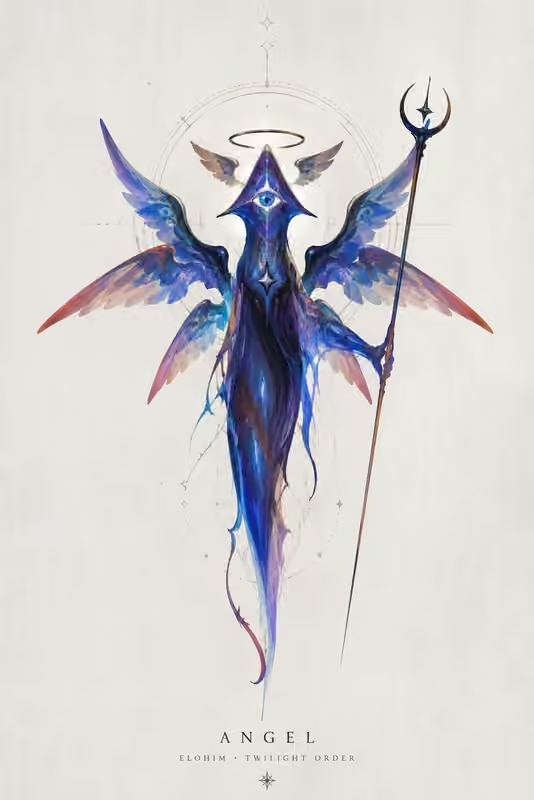
Ashael, the Ninth Witness
Ashael — Existing labeled celestial plate
AshaelExisting labeled celestial plateCODEX1-36
Covenant (observer) · Records first contact; alters Passage; becomes the Open Hand
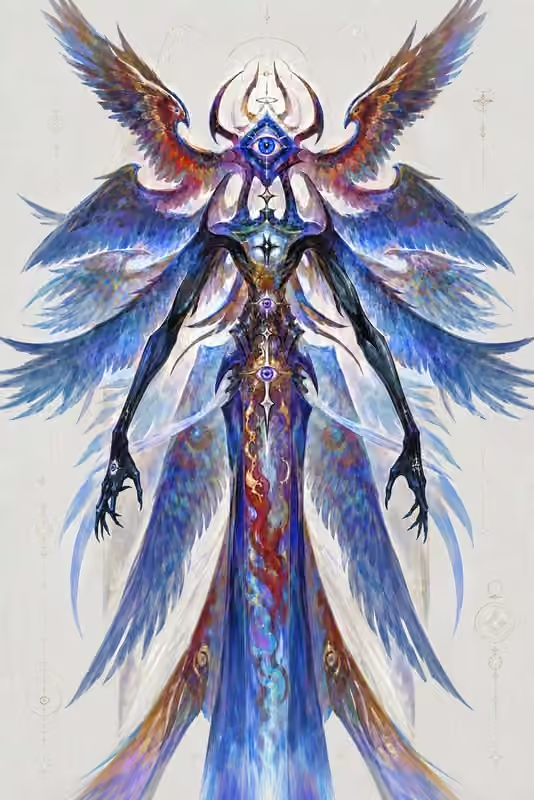
Aurethiel, the Transcendent
Aurethiel — Existing labeled celestial plate
AurethielExisting labeled celestial plateCODEX1-35
Ascendant (dissenting) · Argues that no final form is sacred; designs the Seed
Kyriel, the Star Weaver
Kyriel — Existing labeled celestial plate
KyrielExisting labeled celestial plateCODEX1-30
Wanderer-adjacent · Threads possibility through generations
Elyonar, the First Light
Elyonar — Existing labeled celestial plate
ElyonarExisting labeled celestial plateCODEX1-27
Covenant (senior) · Ashael’s superior; believes stewardship means ownership
Malchior, the Endless Witness
Malchior — Existing labeled celestial plate
MalchiorExisting labeled celestial plateCODEX1-32
Harvest · Records what others erase; the book’s cold conscience
The End
The End — Proposed casting — identity / age details unverified
The EndProposed casting — identity / age details unverifiedTO-1871
Unnamed order · Appears once, before a civilization-scale collapse
Teyra of the River (provisional)
Teyra of the River — Proposed casting — identity / age details unverified
Teyra of the RiverProposed casting — identity / age details unverifiedTO-1872
Human · Takes the first Blessing; the river kingdom’s ferry-keeper
Teyra’s granddaughter, Ome (provisional)
Ome — Design reference only — child-age depiction not established
OmeDesign reference only — child-age depiction not establishedTO-1882
Human, Veil-Touched · The first Unfinished Child; born beneath the Flaming Sword
The first Gatewarden
The first Gatewarden — Proposed casting — identity / age details unverified
The first GatewardenProposed casting — identity / age details unverifiedTO-2068
Constructed Sentinel · Receives the Mandate “nothing enters without being known”

Movement One — The Curtains

  • 1. Structure. Ashael, assigned to watch two realms that have never met, sees the Veil as roads where mortals see absence. He files a report nobody reads.
  • 2. Teyra. A ferry-keeper on a river with a natural Tear at its mouth loses a son to it. Ashael, in Lesser Manifestation, is the stranger who tells her the boy is not dead but elsewhere.
  • 3. The Orders. A council: Covenant, Ascendant, Choir of Stillness, Harvest, Reformed, Monarchs. Each stakes a doctrine on mortals. Elyonar frames the vote as stewardship.
  • 4. Passage. The Blessing is imprinted on Teyra. She crosses and returns. Trade follows within a season; conquest within a year.
  • 5. The Convergence. A desert civilization at a knot of doors becomes the first realm built on permanent openings. The Pharaoh Realm is founded by people who do not know what they are standing on.
  • 6. Mandate. The first Constructed Sentinel is grown around a single sentence. Ashael watches it refuse to reinterpret the sentence and understands what obedience costs.
  • 7. The Harvest. Malchior’s order preserves a dying city, memories and all, without asking. Ashael protests; Malchior shows him the record of a city nobody preserved.

Movement Two — False Hope

  • 8. Dynasties. Blessings become hereditary privilege. Teyra’s son, returned, is married into a court for his crossing-blood.
  • 9. Pilgrimage. Thousands walk toward every manifestation. A failed Ascension leaves a valley of the half-changed. The residue begins to move on its own.
  • 10. Aurethiel. An Ascendant who has stopped believing in ascent. She tells Ashael: if their Anima is unfinished, then unfinished is the gift.
  • 11. Kyriel. A weaver of routes who can thread a road through generations. He cannot choose what a descendant becomes; he can make sure the possibility reaches them.
  • 12. The Hunger. Corrupted beasts hunt magical creatures for their cores. A Sentinel loses its Mandate to an invasive command. Pestilence is named by a mortal physician, not an Elohim.
  • 13. The Wrong Question. Ashael before the full council: “You ask what they should become as though they belong to us.” Elyonar strips him of his seat.

Movement Three — The Seed

  • 14. Three. Ashael, Aurethiel and Kyriel meet outside any order’s reach. They reject a champion: chosen ones can be bred, captured, worshipped, killed.
  • 15. The Alteration. The three alter inheritance. Humans are chosen because their generations turn quickly. The scene is quiet and irreversible.
  • 16. Learnable. Ashael rewrites the Blessing of Passage so the road can be learned. Teyra’s granddaughter Ome crosses with no escort and no Blessing.
  • 17. Enumeration Fails. Kyriel’s projections return no answer. For the first time the Elohim do not know which child will wake. Malchior records it.
  • 18. The Flaming Sword. Ome’s child is born; a witness and a burning blade stand over the birth. The first Self-Crowned.
  • 19. The End. An unnamed Elohim appears at the edge of a kingdom that has bred its children for power. Ashael sees it and understands the clock has started.
  • 20. Traitor-of-Heaven. Ashael’s Sentinel designation is changed. He walks out onto the road he made learnable. Last line: the physician’s first case file on a sickness that eats power.

Carry-forward

Every Mandate Bloodline in the present cast is a Sentinel introduced in Chapters 6, 12 or 17 at the moment its Mandate is spoken. Riven’s Pharaoh Realm is Chapter 5.

Book IIIInheritanceThe Great Shift, the Kynari side
The Elohim’s first beast-folk, freed from a final form by a stranger, have to decide whether freedom from design makes them nothing or makes them a people.
Era
The Great Shift, the Kynari side.
People
The Kynari, already made (Book I).
Canon lock
The Breaking of Names; the law of bodily consent; the Caelune packs on the night roads.

POV

One family across three generations: Sava, registered hunter, the court’s wonder; her daughter Ilun, who founds a school; her granddaughter Asha-of-Nine-Skins, who convenes the first mixed council. A second thread follows a Caelune pack on the night roads, the lineage that will one day feed the Veyr sisters.

Shape

  • 1. Wonders — Kynari scouts crossing predatory wilderness. Courts compete. Priests display. The function registries read aloud like scripture.
  • 2. Functions — Mixed marriages banned in one realm, bred for in the next. A child born with traits nobody designed. The Elohim say deviation; mortals say mutation; Ilun’s school says the third word.
  • 3. The Breaking of Names — Clan by clan, the celestial terms are destroyed. The registrar brings his own ledgers. The Great Shift Wars open on the horizon.

Set pieces

A registry burned clan by clan; the first mixed council; the first failed correction rite, and the residue it leaves.

Plants

The Caelune packs → Moon-Road families → the Veyr line; the Correction Wars that feed Pestilence; the Many-Pelt Clans and the Chimera Wardens.

Full outlineSpine, principal characters, chapters

Spine

“They changed our bodies. We created our people.” The Kynari’s making belongs to Book I; this book opens on a people that already exists and follows one family across three generations: registered as a wonder, raised as a function, grown into a people. The Elohim never appear in person; their registries do. The antagonist is a word, deviation, and the climax is a people choosing a different word.

The Saurai are off the page. Book IV runs beside this one, and the two should be drafted with their calendars aligned so that the Breaking of Names (here) and the first Solar throne (there) fall in the same season.
Principal characters

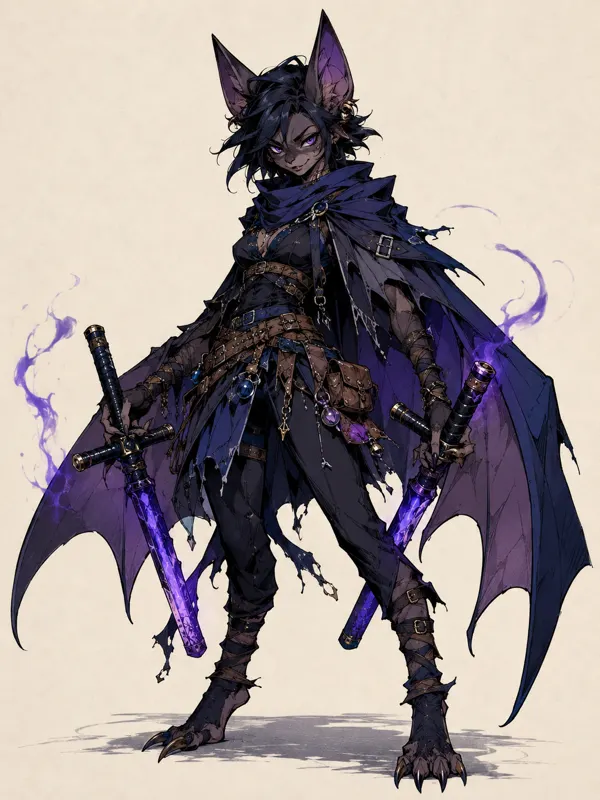
Sava of the Nine Pelts (provisional; ancestor of “Mother Sava”)
Sava of the Nine Pelts — Proposed casting — identity / age details unverified
Sava of the Nine PeltsProposed casting — identity / age details unverifiedTO-2227
First generation; registered hunter; granddaughter of the Ferrowind packs the Stranger freed (Book I)
Ilun (provisional)
Ilun — Design reference only — child-age depiction not established
IlunDesign reference only — child-age depiction not establishedTO-1884
Sava’s daughter; founds a school in defiance of her classification
Asha-of-Nine-Skins
Asha-of-Nine-Skins — Proposed casting — identity / age details unverified
Asha-of-Nine-SkinsProposed casting — identity / age details unverifiedTO-1887
Ilun’s granddaughter; organizes the first mixed council; leads the Breaking of Names (Atlas figurehead)
Registrar Ophet (provisional)
Registrar Ophet — Proposed casting — identity / age details unverified
Registrar OphetProposed casting — identity / age details unverifiedTO-1921
Successor to Book I’s first Registrar; burns his own ledgers
Tarn of the Caelune (provisional)
Tarn of the Caelune — Proposed casting — identity / age details unverified
Tarn of the CaeluneProposed casting — identity / age details unverifiedTO-2228
Night-road pack leader; the lineage that feeds the Veyr sisters
Lord-Steward Haddon (provisional)
Lord-Steward Haddon — Proposed casting — identity / age details unverified
Lord-Steward HaddonProposed casting — identity / age details unverifiedTO-1894
Human court official who owns Sava’s contract
Old Kheled (provisional)
Old Kheled — Proposed casting — identity / age details unverified
Old KheledProposed casting — identity / age details unverifiedTO-1898
Caravan matriarch; the Long Migration begins as her family’s habit

Movement One — Wonders

  • 1. The Registry. Registrar Ophet reads the classifications aloud: hunter, guardian, climber, burrower. Sava is a line in his book before she is a person in the story.
  • 2. Across the Wilds. Sava crosses a predatory forest no human expedition survived. Haddon’s court, which owns her contract, celebrates.
  • 3. Display. A festival of wonders. Sava exhibited beside beasts. She notices the beasts are better fed.
  • 4. The Night Roads. Tarn’s Caelune pack runs threshold routes nobody maps. Their spatial hearing and pack synchronization are not in any column.
  • 5. The Questions. A merchant asks whether a Kynari can own land she can reach but humans cannot. A jurist asks whether mixed children are citizens or inventory.
  • 6. Ophet’s Doubt. The registrar is ordered to classify a mixed child. There is no column. He leaves the line blank.

Movement Two — Functions

  • 7. Ilun. Sava’s daughter is born a hunter on paper and a teacher in fact. She opens a school; the court closes it; she opens it again.
  • 8. Bans and Breeding. One realm forbids mixed marriage; the next pays for it. Haddon tries to buy Ilun’s bloodline outright.
  • 9. Deviation. A child born with traits nobody designed. The Elohim word arrives by edict. Mortal courts prefer mutation. Ilun’s school is where the third word is first spoken.
  • 10. The Mercy, Written. Sava’s grandmother tells Ilun’s school the story of the traveler who removed a limit (Book I, Chapter 16). The school writes it down. The first time a Kynari hears it as history instead of scripture.
  • 11. Correction. A realm tries to reverse a Kynari lineage with a rite. The subjects live; something in the residue does not stop moving. The first Pestilence case the reader recognizes.
  • 12. Caelune and Human. Tarn’s pack takes in a human traveling family on the night roads. Intermarriage within a generation. The Moon-Road families begin.
  • 13. Old Kheled. A caravan matriarch moves a displaced clan through a Tear because the court will not. Her grandson watches. The Long Migration is a family habit before it is a tradition.

Movement Three — A People

  • 14. Asha-of-Nine-Skins. Ilun’s granddaughter convenes jackal, feline, mountain and avian lines in one hall. Nobody has done it because the registries say they are different functions.
  • 15. The Inheritance Argument. Before the council, the question: are we what they made, or what we make? Asha’s answer is a bonfire.
  • 16. The Breaking of Names. Clan by clan, the celestial terms are destroyed. Ophet brings his own ledgers.
  • 17. Consent. The council’s first law, written after the correction rites: no body is changed without its own yes. Mother Sava’s law, named for Sava’s line.
  • 18. The Wars Begin. Kingdoms respond: welcome, enslave, worship, exterminate, reproduce, reverse. The Great Shift Wars open on the horizon.
  • 19. The Many-Pelt Clans. Mixed-lineage confederacies form from the council. The Chimera Wardens are founded to hunt what the correction rites left.
  • 20. The Stranger, Unnamed. Asha reads the school’s written Mercy aloud at the council and strikes the word god from it. The Unblooded Ancestor becomes a stranger again, which is what he wanted. Somewhere else, he is fixing a wall.

Carry-forward

The Caelune → Moon-Road → Veyr line (Chapter 12; Book X picks it up with Lunari instruction); Var Kheled’s Hundred Migrations (Chapter 13; Book VI); Mother Sava’s law of bodily consent; the Correction Wars feeding Pestilence on the Kynari side as Book IV feeds it on the Saurai side.

Book IVContinuanceThe Continuance
Where the Kynari were built to change, the Saurai were built to endure, and three branches of one people carry that endurance into three different worlds until none of them remembers the others exist.
Era
The Great Shift, the Saurai side; runs parallel to Book III.
People
The Saurai, in three currents.
Canon lock
The Continuance principle (endure, retain, remember); the Crown Reflex; the Vael’Rime meet the Frozen Sea; the Sanghavar cross from blood regulation to blood manipulation; the three currents separate and forget each other.

POV

Three strands, one per current. Ara-Sahr of the Aru’Sahra, whose Crown Reflex wakes when a mob closes on his village and never fully rests again. Vael of the Vael’Rime, who walks north into cold that should kill her and hears something dreaming under the ice. Kessa of the Sanghavar (provisional), a physician in a poisoned marsh realm who discovers that Anima travels through blood.

Shape

  • 1. Endure — Settlers of volcanic corridors, ice caverns and venomous swamps. The Elohim call it success; the Saurai call it home.
  • 2. Retain — Dormant traits return generations later. Ara-Sahr’s protection becomes a throne. Vael’s people learn the thing under the ice can be soothed. Kessa’s survival art becomes a political technology.
  • 3. Remember — The three currents diverge into the Solar dynasts, the Ice-Wyrm keepers and the Red Coil houses. The book ends with three cultures that consider themselves unrelated, and a reader who knows better.

Set pieces

The Crown Reflex waking; the first Frost-Reaper lullaby sung to something that could end the world; the first blood-debt collected.

Plants

Riven’s route (Aru’Sahra → Solar dynasts → Ara’Kai), Yahia’s (Vael’Rime → Frost-Reapers), Kaisel’s (Sanghavar → Red Coil → Blood Courts). The codex rule holds: their shared ancestry must not be public knowledge at the start of the saga.

Full outlineSpine, principal characters, chapters

Spine

“The Kynari change. The Saurai remember.” Where Book III is one family changing across three generations, this book is three branches of one people refusing to change, and the three different worlds that refusal builds. The ancient celestial term is the Continuance: bodies made to carry useful traits across hostile realms and across generations. The novel shows what three kinds of endurance cost: a protection that becomes sovereignty, a vigil that becomes a lullaby, a survival art that becomes a monarchy.

The three strands never meet after Chapter 2. That is the structure’s argument. By the final movement the Solar dynasts, the Ice-Wyrm keepers and the Red Coil houses do not know one another exist, and the codex rule is honored: their shared ancestry stays secret until the main saga earns the reveal.
Principal characters

Sahr-Tek (provisional)
Sahr-Tek — Proposed casting — identity / age details unverified
Sahr-TekProposed casting — identity / age details unverifiedTO-2054
Aru’Sahra / Solar · First generation; settler of a volcanic corridor; Ara-Sahr’s father
Ara-Sahr (provisional; root of the Ara’Kai name)
Ara-Sahr — Proposed casting — identity / age details unverified
Ara-SahrProposed casting — identity / age details unverifiedTO-2039
Aru’Sahra / Solar · Feels the Crown Reflex; becomes the first Solar dynast
Nemet (provisional)
Nemet — Proposed casting — identity / age details unverified
NemetProposed casting — identity / age details unverifiedTO-2120
Aru’Sahra / Solar · Ara-Sahr’s sister; refuses the throne he builds; keeps the lineage records
Vael (provisional)
Vael — Proposed casting — identity / age details unverified
VaelProposed casting — identity / age details unverifiedTO-1832
Vael’Rime / Frost · Walks north with refugees; first to hear the thing under the ice
Hrothe (provisional)
Hrothe — Proposed casting — identity / age details unverified
HrotheProposed casting — identity / age details unverifiedTO-1849
Vael’Rime / Frost · Vael’s son; first Ice-Wyrm keeper; sings the first lullaby
Kessa Red-Coil (provisional)
Kessa Red-Coil — Proposed casting — identity / age details unverified
Kessa Red-CoilProposed casting — identity / age details unverifiedTO-2045
Sanghavar / Crimson · Physician in a poisoned marsh realm; discovers Anima travels through blood
Oren Red-Coil (provisional)
Oren Red-Coil — Proposed casting — identity / age details unverified
Oren Red-CoilProposed casting — identity / age details unverifiedTO-2086
Sanghavar / Crimson · Kessa’s grandson; aristocratizes what she discovered; founds the first House
Celestial Adaptor Theoriel
Celestial Adaptor Theoriel — Proposed casting — identity / age details unverified
Celestial Adaptor TheorielProposed casting — identity / age details unverifiedTO-1965
Elohim · The adaptor from Book I, now running the Saurai programs; Chapters 1–2 only
The Frozen Sea
The Frozen Sea — Creature concept — anatomy / species match needs review
The Frozen SeaCreature concept — anatomy / species match needs reviewTO-0946
Entity · Never named as a god in this book; a dream under the ice

Movement One — Endure

  • 1. The Continuance. Theoriel’s second program. Where the Kynari were drawn from mammal and bird, these are drawn from scale, serpent and the organisms that survive impossible realms. Not dragons; the principles that let dragons live. Three clans, one morning, three directions.
  • 2. Three Roads. The last chapter in which the strands share a page. Sahr-Tek south to the fire; Vael north to the ice with a column of human refugees; Kessa east to the marsh. A shared meal, a shared joke about scales, and then never again.
  • 3. The Corridor. (Solar) Sahr-Tek’s clan settles a volcanic realm where humans last an hour. Priests call it proof. Sahr-Tek calls it a place to raise children.
  • 4. The Walk. (Frost) Vael’s body slows toward sleep in cold that should kill reptile blood. It does not kill her. She stores the cold the way others store heat.
  • 5. The Marsh. (Crimson) Kessa’s people in a realm of venom, parasites and blood-borne disease. Their survival is internal: clotting, toxin analysis, immune rewriting. Kessa is a physician because everyone is.
  • 6. Wonders. Courts compete for all three. The Solar settlers are offered land; the Frost column is offered a border to hold; the marsh clan is offered a plague to cure.
  • 7. The Village. (Solar) A mob closes on the corridor settlement. Something communal wakes in young Ara-Sahr: the threat is to the village, and the power answers the village. The Crown Reflex.

Movement Two — Retain

  • 8. Under the Ice. (Frost) Beneath the deep ice, something is dreaming. Vael hears it. Her people can approach what killed everyone else because their bodies endure its resonance.
  • 9. Threshold. (Crimson) Kessa, treating a dying child, feels the child’s Anima move through the blood and follows it. Then redirects it. A survival mechanism crosses into a technology.
  • 10. Protection Becomes Rule. (Solar) Ara-Sahr’s Reflex never fully rests. The village becomes a town, the town a court. People who are always protected begin to kneel. Nemet notices first.
  • 11. Dormant. All three strands: traits absent for generations reappear in children. Scales under stress. Pupils that slit in the dark. The Elohim call it deviation; the Saurai call it inheritance, and keep records.
  • 12. The Lullaby. (Frost) Hrothe, Vael’s son, sings to the thing under the ice when it stirs. It settles. The first Frost-Reaper rite is a boy soothing something that could end the world.
  • 13. Price. (Crimson) Kessa’s art spreads. Her grandson Oren sets terms: the clan will heal, and the healed will owe. The first blood-debt collected.
  • 14. The Throne. (Solar) Ara-Sahr takes a seat his sister built as a chair. Nemet refuses to sit beside it and takes the lineage records into a vault. The Solar current chooses to remember, in writing.

Movement Three — Remember

  • 15. Correction. Realms try to reverse Saurai lineages with rites. The subjects live. The residue does not stop moving. Pestilence feeds on both sides of the Shift.
  • 16. Keepers. (Frost) The Ice-Wyrm keepers organize around the lullaby. Hrothe’s children inherit a vigil, not a kingdom. The dragon they sing to is a fragment of something larger they will never see.
  • 17. Houses. (Crimson) Oren’s descendants become the Red Coil Houses. Blood-debt becomes doctrine. Medicine becomes monarchy.
  • 18. Dynasts. (Solar) Ara-Sahr’s line takes the name Ara’Kai. The Crown Reflex is bred for. Nemet’s records are sealed beneath the court, which is where Book VIII’s embalmers will one day find them.
  • 19. Forgetting. Three cultures at three distances. A Solar scholar reads of scale-folk in the far north and assumes a different species. A keeper’s child asks why their blood runs hot and is told it always has.
  • 20. Three Heirs. Coda in three images, unnamed: a sovereign whose protection became a throne; a keeper singing a dragon to sleep; a physician collecting a debt. The reader knows what each becomes. None of them knows the others exist.

Carry-forward

Riven’s route (Aru’Sahra → Solar dynasts → Ara’Kai → Ahk Ra → Khari), Yahia’s (Vael’Rime → Ice-Wyrm keepers → Frost-Reapers → Yukimura) and Kaisel’s (Sanghavar → Red Coil → Blood Courts → Sovereign Clan) all begin here. Ahk Ra (Book VIII) expresses the Continuance as domination; Riven inverts it. Yahia’s Dragon Eye is Chapter 11’s dormant trait pushed to the surface by Chapter 8’s resonance. The reveal that three cultures share one ancestor is reserved for the main saga.

Book VHollowThe Expedition That Did Not Starve
A permanent Tear closes behind an expedition, and the horror is not that they die but that the Veil finds a way for them to live.
Era
The Ashcroft Crossing, before the Nomads, Pharaohs, Elven Dynasties or Kynari Packs had names.
People
Nearly three hundred explorers, scholars, priests, families and refugees.
Canon lock
The Tear seals behind them; the Veil rewrites them into the first beings to metabolize souls; five remain.

POV

A rotating ensemble that thins as the book goes on. The five who will become the Hollow Family are introduced as ordinary members: a mother who keeps the children calm, a father who keeps the camp quiet, a scholar who records every death, a lamplighter everyone trusts, and twins nobody can tell apart. The reader should like all five.

Shape

  • 1. The Crossing — A rescue of a lost scout, a Tear that is wider than any recorded, and a seal that closes like a held breath. Rationing. Maps that stop agreeing. The first traveler who hears a loved one calling from the dark.
  • 2. The Exhaustion — Anima runs out before food does. The Veil offers an exchange nobody chooses consciously. The expedition stops needing to eat, and starts needing something else. The scholar’s journal is the book’s spine; its entries grow calmer and more precise as the writer stops being a person.
  • 3. The Family — Two hundred and ninety-odd become the first Veil Lost. The five remain, and discover what they are by what they can do: plant a memory, silence an army, make a stranger relive another’s death, hang a lantern, blur a face. The last chapter is the first Crimson Veil forming around the camp, from inside.

Set pieces

The Observer’s first chronicle entry in the third person; the Lantern lighting the camp while the camp dims; the Twins switching places for the last time and nobody noticing, including them.

Plants

The Nomad Oath (“never leave your name”) as the lesson learned by whoever later finds the site; the Realm of the Wicked King’s throne room (Book IX); Khari’s survival (Book XI) as the only known refutation of what this book establishes.

Full outlineSpine, principal characters, chapters

Spine

The cycle’s horror novel, and its shortest. The Veil remembers every life it was never meant to have; this is the life. The book’s rule is that the reader must like the five who remain, so that the Hollow Family in the present reads as a tragedy wearing a predator’s face. Nothing supernatural happens for the first third. The expedition is competent. That is the point.

The Observer’s journal is the frame. Its early entries are first person and frightened; its last are third person and serene.

Principal characters

Names are provisional; roles only are canon.

Captain Edmund Ashcroft (provisional)
Expedition leader; dies in Movement Two · Becomes: the name the Crossing keeps
Marit (provisional)
Mother of three; keeps the children calm; rations stories · Becomes: The Mother
Dov (provisional)
Quartermaster; keeps the camp silent on watch · Becomes: The Father
Halloran (provisional)
Scholar; records every death · Becomes: The Observer
Pell (provisional)
Lamplighter; trusted by everyone; carries the light · Becomes: The Lantern
Issa and Ilse (provisional)
Twins; nobody can tell them apart · Becomes: The Twins
The scout, Renn (provisional)
Lost on the far side; the reason they cross · Becomes: First of the Veil Lost
Father Ambrose (provisional)
Expedition priest · Becomes: leads the first to walk into the red willingly

Movement One — The Crossing

  • 1. Manifest. Nearly three hundred names read at muster: scholars, priests, families, refugees. The Observer records them all. The reader will watch the list shrink.
  • 2. Renn. A scout fails to return from a Tear wider than any on record. The captain decides the expedition can afford a rescue.
  • 3. Through. The crossing is beautiful. Then the seal closes behind them like a held breath. No panic yet; they have a month of supplies.
  • 4. Rationing. Dov’s ledger. Marit’s bedtime stories, rationed too. Pell lights the camp and the children sleep.
  • 5. Disagreeing Maps. Two surveyors chart the same ridge and get different valleys. Halloran notes it as instrument error.
  • 6. The Calling. A refugee hears his dead wife from the dark and walks toward her. The twins bring him back. He cannot say which twin.
  • 7. Ambrose. The priest reads the sealed Tear as a test. Faith holds the camp together for one more week.

Movement Two — The Exhaustion

  • 8. Hunger Ends. Food runs out. Nobody dies. The captain calls it mercy.
  • 9. Anima. A healer notices the children’s lanterns of Anima dimming before their bodies do. The hunger has moved.
  • 10. The Exchange. The Veil offers. No one chooses consciously. One morning a man wakes rested and his bunkmate does not wake at all.
  • 11. Halloran’s Entries. The journal turns precise. He records who fed and who was fed, in a hand that no longer shakes.
  • 12. Ashcroft Dies. The captain refuses the exchange and starves on a full stomach. The Observer records it as the expedition’s first honest death.
  • 13. Marit’s Story. She tells the children a story about home that none of them lived. They remember it the next morning as their own.
  • 14. Dov’s Watch. He silences a riot without speaking. The silence spreads farther than the camp.

Movement Three — The Family

Carry-forward

The Nomad Oath is spoken here only as the reaction of whoever finds the journal. The Kneeling Realm (Book IX) gives the five a home; Khari (Book XI) is the only person ever to walk out of what this book builds.

Book VITitanfallWhen Every Door Opened at Once
Four peoples lose the thing that made them powerful on the same day, and each decides what to keep.
Era
The War of Ascension and Titanfall.
People
The Vantari, the Elven Dynasties, the Kynari caravans, the Veilborn-to-be.
Canon lock
The Shattering Sky, the Weeping Green, the Hundred Migrations, the Grey Meridian founded.

POV

Four leads, each the figurehead the Atlas names: Mira Senn (Vantari), who destroys the Crown Beacon; Ilyra Venn (Elven), whose memory-crystal lattice carries the dead cities’ scream through the rootways; Var Kheled (Kynari), who leads the Hundred Migrations; Sera Meridian (Veilborn), who founds a city inside a corridor that belongs to no realm.

Shape

  • 1. The Argument Becomes Military — Loyalists, Free Realms, the Ascended and the Null-born. Titans enter and battles become geography. Ashael opens himself as a living nexus and can never fully manifest again.
  • 2. The Four Losses — Mira collapses the Storm Roads rather than surrender them; the sky does not stop burning for generations. Ilyra’s forests shed black leaves and bloom in funeral colors for seven years. Var walks species through routes no map holds. Sera’s camp drifts on a piece of architecture through the Veil, learning which surfaces are real.
  • 3. What They Kept — Sealed Memory. A road that should never have one owner. The law of bodily consent. A city of refugees with flags from nowhere. The book ends before Restoration, on the first night the four of them are in one room.

Set pieces

The Crown Beacon’s last discharge; a Kynari caravan carrying an entire seed-stock ecosystem across a Tear; the first Meridian Sickness case and the first identity-anchoring rite.

Plants

The Grey Meridian that makes Vaughn a citizen; the Vantari decentralization that makes the Spire-Halls’ later calibration doctrine a betrayal; Pestilence’s great feeding ground.

Full outlineSpine, principal characters, chapters

Spine

The cycle’s war novel, built as four novellas that converge. Each lead loses the thing that made her people powerful and chooses what to keep; the Atlas already names what each kept (Sealed Memory, a road with no owner, bodily consent, neutral passage). The book earns those principles by making the reader watch them cost something.

The Titans are never POV and never fully seen: a Titan battle is a landscape changing. Ashael’s self-sacrifice as a living nexus is the hinge of the middle movement and is witnessed by all four leads from four realms at once.
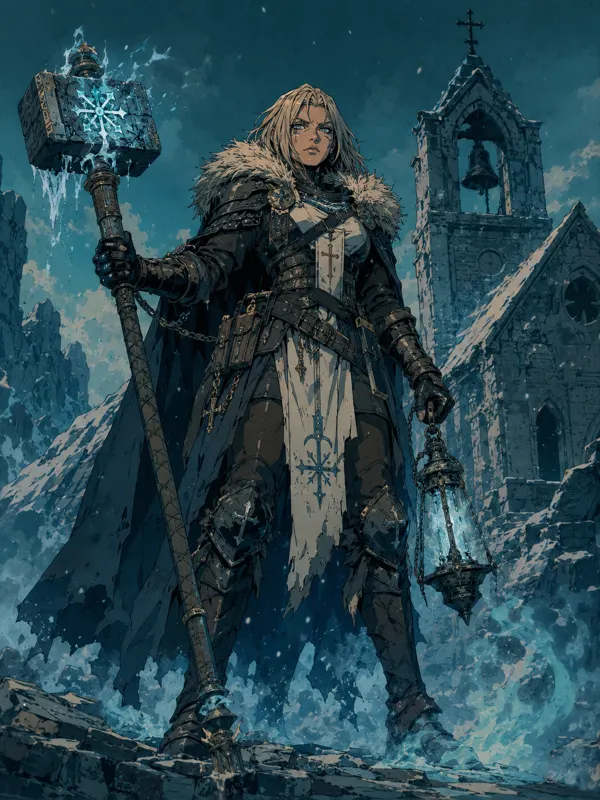
Principal characters

Mira Senn
Mira Senn — Proposed casting — identity / age details unverified
Mira SennProposed casting — identity / age details unverifiedTO-1902
Vantari · Relay pilot; destroys the Crown Beacon (Atlas figurehead)
Vael Taran
Vael Taran — Proposed casting — identity / age details unverified
Vael TaranProposed casting — identity / age details unverifiedTO-1913
Vantari · Thunder Cartographer; Mira’s mentor; maps the impossible storm
Ilyra Venn
Ilyra Venn — Proposed casting — identity / age details unverified
Ilyra VennProposed casting — identity / age details unverifiedTO-1914
Elven · Architect of the memory-crystal lattice (Atlas figurehead)
Cael Thyr
Cael Thyr — Proposed casting — identity / age details unverified
Cael ThyrProposed casting — identity / age details unverifiedTO-2232
Elven · Rootbound scholar; proves magic works without Elohim resonance
Var Kheled
Var Kheled — Proposed casting — identity / age details unverified
Var KheledProposed casting — identity / age details unverifiedTO-2299
Kynari · Leads the Hundred Migrations (Atlas figurehead)
Sera Meridian
Sera Meridian — Proposed casting — identity / age details unverified
Sera MeridianProposed casting — identity / age details unverifiedTO-1917
Veilborn-to-be · Founds the Grey Meridian (Atlas figurehead)
Old Kesh
Old Kesh — Proposed casting — identity / age details unverified
Old KeshProposed casting — identity / age details unverifiedTO-1919
Veilborn-to-be · First to map an echoing road
Ashael
Ashael — Existing labeled celestial plate
AshaelExisting labeled celestial plateCODEX1-36
Elohim · Opens himself as a nexus during Titanfall
Commander Rhuel (provisional)
Commander Rhuel — Proposed casting — identity / age details unverified
Commander RhuelProposed casting — identity / age details unverifiedTO-2237
Celestial Loyalist · The human face of the Ascended seizure of the Storm Roads

Movement One — The Argument Becomes Military

  • 1. Four Skies. Four openings, one per lead, on the morning the war is declared: Mira in a relay tower, Ilyra in a crystal vault, Var on a caravan road, Sera in a border camp.
  • 2. Loyalists and Free Realms. The sides form. The Ascended attempt to seize celestial power; the Null-born cut away Anima entirely. Nobody is simply right.
  • 3. The Storm Roads. Commander Rhuel’s loyalists take a Vantari relay tower. Mira learns the roads are now strategic infrastructure.
  • 4. The Rootways. Ilyra’s lattice carries battle reports across realms in heartbeats. Cael Thyr warns that it can carry anything.
  • 5. First Titan. A battle becomes a geographical event. Var’s caravan is on the wrong side of a mountain that did not exist that morning.
  • 6. The Corridor. Sera’s refugees are caught between realms separating too quickly. They camp on a piece of drifting architecture.

Movement Two — The Four Losses

  • 7. The Crown Beacon. Rhuel’s fleet converges on the Vantari network’s heart. Vael Taran maps a storm that should not exist to buy time.
  • 8. Mira’s Choice. She collapses the network rather than surrender it. Millions of charged pathways discharge at once. The Shattering Sky.
  • 9. The Scream. Dying cities’ psychic shock enters the rootways. Thousands of miles away, forests shed black leaves. Ilyra’s lattice carried it.
  • 10. Ashael Opens. Collapsing realm pathways redirected through one being’s body. All four leads see the same light from four skies. He can never fully manifest again.
  • 11. The Hundred Migrations. Var moves refugees, beasts, seed stock and entire ecosystems through routes no map holds. Species survive because he refuses to let catastrophe choose.
  • 12. Meridian Sickness. Sera’s camp learns which surfaces are real and which memories are local. A child forgets where she was born. Old Kesh maps the first echoing road.
  • 13. Titanfall. The Titans die and wake. Their deaths rip the Veil; their bodies become landscapes. The chapter is told in four fragments, one per realm.

Movement Three — What They Kept

  • 14. Sealed Memory. Ilyra argues to destroy the lattice. Cael Thyr argues to keep it under oath. The doctrine: preserve, but never let it move freely again.
  • 15. No Owner. The Vantari rebuild only part of the network and decentralize command. Mira writes the principle a road between realms should never have one owner.
  • 16. Consent. Var’s council, after the Skin War’s chimera soldiers, writes the law of bodily consent into Kynari custom.
  • 17. The Grey Meridian. Sera stabilizes a corridor that belongs to no realm and raises flags from nowhere. Elohim envoys arrive to recruit or correct; she refuses both.
  • 18. The Scars. A storm from the Shattering Sky circles a region carrying ruins, voices and travelers from the war. It will still be circling in the present.
  • 19. Four in a Room. The leads meet for the first time, on the eve of Restoration. None of them trusts the others. Each has something the others cannot replace.
  • 20. Seven Years. Coda. Ilyra’s forests bloom in funeral colors for seven years. On the eighth spring an Elven child dreams of a city she has never seen.

Carry-forward

The Grey Meridian (Vaughn), the Vantari decentralization the Spire-Halls betray (Arelion, Kirshino), the Frozen Sea’s resonance met by Vael’Rime descendants during the migrations (Yahia), and the Titan fragments entering bloodlines (Amelia, Nia) all land here.

Book VIICrossroadsNo Road Belongs Only to Kings
A committee of clerks, surgeons and ex-celestials has to reduce civilization’s power before civilization becomes unable to survive itself, and the thing they build by accident outlasts everything they built on purpose.
Era
The Restoration Covenant and the Long Peace that followed.
People
The Great Uncrowned (humanity), the Hollow, the Highborn, and the first Nomads.
Canon lock
The Restoration dismantles Titan forges, seals Gates, ends Demigod breeding; the Law of Chosen Nature; the Nomads form for the people kingdoms fail.

POV

Dena Marr, organizer of the first civilian interrealm relief network; Doctor Pell of the Hollow, first to remove a celestial Mandate from a living mortal; Khor Ash-Tongue, infernal jurist; Mandate-Zero, the Sentinel who publicly renounces a genocidal command. The Nine Clerks appear only as a document that keeps being revised.

Shape

  • 1. The Table — Surviving Elohim, Demigods, Kynari rulers, Elven dynasts, Sentinels and ordinary delegates in one hall. The ordinary delegates win the argument for rotating command because immortals cannot be trusted to step down.
  • 2. The Cost — The Purity Crusades. Hollow surgeons separating command structures from souls while frightened kingdoms purge Infernal bloodlines. Several revered celestial houses exposed as collaborators. The Law of Chosen Nature written in the backlash.
  • 3. The Road — Refugees, realm-crossers and the Veil-touched fall through every border. Dena’s relief caravans, Sera Meridian’s passage houses and Var Kheled’s routes braid into a network nobody designs. The first Crossroads. The first oath spoken at a Crimson Veil’s edge after a recon unit fails to come back: leave your fear outside, leave your pride outside, never leave your name.

Set pieces

Mandate-Zero’s renunciation before the Sentinel Courts; the Concordance Ledger signed; the first Nomad memory-verification of a survivor who returned as someone else.

Plants

Khari & Sons as a Nomad anchor; the Restoration infrastructure that the Gilded Jackals will inherit and corrupt (Book VIII); the Equal Scale; the habit of never building culturally homogeneous units, which one day places Cell 9 together.

Full outlineSpine, principal characters, chapters

Spine

The book about institutions, which means it has to be the funniest and the most humane in the cycle or it dies on the page. Its thesis is the Great Uncrowned’s: we survive by borrowing the impossible and making it ordinary. The Restoration Covenant is the deliberate achievement; the Nomads are the accident, and the accident outlives the achievement.

Structure: a council story (the Table) braided with a road story (the relief caravans), until the road becomes the thing the Table could not build.
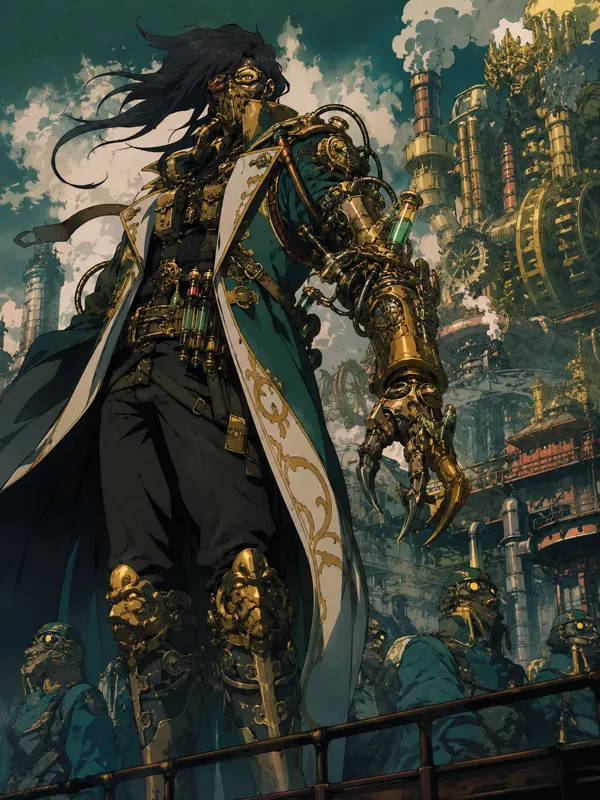
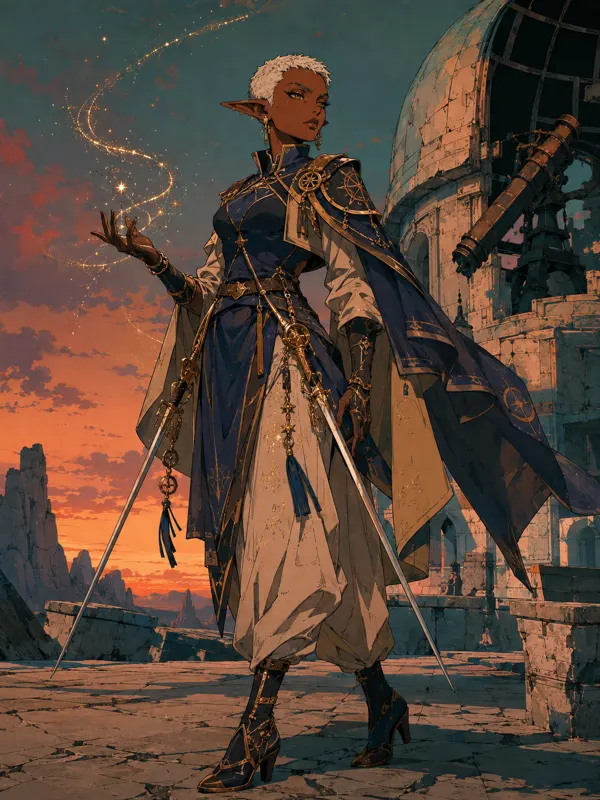
Principal characters

Dena Marr
Dena Marr — Proposed casting — identity / age details unverified
Dena MarrProposed casting — identity / age details unverifiedTO-1922
Human · Organizer of the first civilian interrealm relief network (Atlas figurehead)
Orrin Hale
Orrin Hale — Proposed casting — identity / age details unverified
Orrin HaleProposed casting — identity / age details unverifiedTO-1929
Human · Compiler of the Universal Field Manual; Dena’s quartermaster
The Nine Clerks
The Nine Clerks — Proposed casting — collective reference
The Nine ClerksProposed casting — collective referenceTO-1932
Human · Anonymous authors of the rotating-command charter; appear only as a redrafted document
Doctor Pell
Doctor Pell — Proposed casting — identity / age details unverified
Doctor PellProposed casting — identity / age details unverifiedTO-2298
Hollow · First to remove a celestial Mandate from a living mortal
Mara Without-Name
Mara Without-Name — Proposed casting — identity / age details unverified
Mara Without-NameProposed casting — identity / age details unverifiedTO-1933
Hollow · Founder of the Empty House
Khor Ash-Tongue
Khor Ash-Tongue — Proposed casting — identity / age details unverified
Khor Ash-TongueProposed casting — identity / age details unverifiedTO-1934
Highborn (Infernal) · Jurist; writes the first neutral pact code
Seraph Vale
Seraph Vale — Proposed casting — identity / age details unverified
Seraph ValeProposed casting — identity / age details unverifiedTO-2558
Highborn (Celestial) · Testifies against her own house
Mandate-Zero
Mandate-Zero — Proposed casting — identity / age details unverified
Mandate-ZeroProposed casting — identity / age details unverifiedTO-2080
Sentinel · Publicly renounces a genocidal command
Sera Meridian, Var Kheled, Mira Senn
Sera Meridian — Proposed casting — identity / age details unverified
Sera MeridianProposed casting — identity / age details unverifiedTO-1917
Var Kheled — Proposed casting — identity / age details unverified
Var KheledProposed casting — identity / age details unverifiedTO-2299
Mira Senn — Proposed casting — identity / age details unverified
Mira SennProposed casting — identity / age details unverifiedTO-1902
From Book VI · Now elders at the Table
Khari the Elder (provisional)
Khari the Elder — Proposed casting — identity / age details unverified
Khari the ElderProposed casting — identity / age details unverifiedTO-1937
Human, Nomad · A caravan smith whose family shop becomes “Khari & Sons”
Serjeant Oyelaran (provisional)
Serjeant Oyelaran — Proposed casting — identity / age details unverified
Serjeant OyelaranProposed casting — identity / age details unverifiedTO-2163
Human, Nomad recon · Leads the unit that does not come back from the first charted Crimson Veil

Movement One — The Table

  • 1. The Hall. Surviving Elohim, Demigods, Kynari rulers, Elven dynasts, Sentinels and ordinary delegates in one room. Dena Marr is there because somebody has to feed them.
  • 2. Reduce. The emergency doctrine: reduce civilization’s power before it becomes unable to survive itself. Nobody wants to go first.
  • 3. The Forges. Titan forges destroyed. Dangerous Gates sealed. Demigod breeding programs dismantled. Each a chapter-long argument; each won by the delegate with the least to lose.
  • 4. Rotating Command. The Nine Clerks’ charter, drafted by people who will be dead in forty years, defeats the immortals’ objection that it is unstable. Instability is the feature.
  • 5. The Ledger. The Concordance Ledger signed: equal interrealm civic status. Khor Ash-Tongue adds a clause nobody reads until Movement Two.
  • 6. Custody. Celestial relics vanish into custody networks; anti-Pharaoh weapons and bloodline registries appear. The infrastructure the Gilded Jackals will inherit is built by well-meaning people in a hurry.

Movement Two — The Cost

  • 7. Purity. Frightened kingdoms purge Infernal and Fallen bloodlines. Celestial houses join.
  • 8. Pell’s Table. A Hollow surgeon separates a command structure from a Blessed soldier’s soul without destroying either. The reader watches the first Mandate removal in real time.
  • 9. Mandate-Zero. A Sentinel built around a genocidal command renounces it before the Sentinel Courts. It does not know what it is afterward. The Highborn argue it is responsible for what it chooses next.
  • 10. Seraph Vale. A celestial heir testifies that her revered house collaborated in old atrocities. The crusade’s moral floor collapses.
  • 11. Chosen Nature. The backlash produces the law: ancestry may justify caution, never automatic guilt. The Equal Scale is cast to react to coercion, not blood.
  • 12. The Empty House. Mara Without-Name opens a refuge where every resident chooses identity rather than recovering a lost one. Pell argues with her; both are right.

Movement Three — The Road

  • 13. Between Borders. Refugees, realm-crossers and the Veil-touched fall through every border the Table drew. Dena’s caravans pick them up because nobody else will.
  • 14. Passage Houses. Sera Meridian’s neutral houses at the major Gates, Var Kheled’s routes, Dena’s kitchens. The network braids itself without a charter.
  • 15. The Crossroads. The first permanent Nomad settlement, on ground no kingdom claims. Khari the Elder sets up a forge. The sign says Khari & Sons before he has any.
  • 16. The Red. Oyelaran’s recon unit enters the first charted Crimson Veil. Two return. Neither is who went in.
  • 17. Verification. Months of memory checks. The protocol is written in one night: DO NOT ENTER. Survivors are re-interviewed until the people who knew them agree they came back.
  • 18. The Oath. At the Veil’s edge, Dena says the words the Nomads will keep: leave your fear outside, leave your pride outside, never leave your name.
  • 19. Mixed Units. An argument over whether squads should share a culture. The clerk who loses it writes the rule that wins: never a homogeneous unit. The rule that one day places Cell 9 together.
  • 20. The Long Peace Begins. Coda. The Table dissolves. The road does not. Dena, old, watches a caravan leave and does not know its destination. That is the point.

Carry-forward

The Jackals’ custody infrastructure (Chapter 6) and the first blank ledger line (Book VIII) are the same impulse at two temperatures. Khari & Sons (Chapter 15) is the shop Riven grows up above. The mixed-unit rule (Chapter 19) is the only deliberate convergence the codex allows.

Book VIIIThe Walking StarThe First Eclipse War, in the Solar Dominion
The Dominion consolidates supernatural authority under one bloodline, gets exactly what it asked for, and spends the rest of the book trying to put it back.
Era
The First Eclipse War, in the Solar Dominion.
People
The Pharaoh Dynasties, the Sun-Serpent Circle, the custodians who become the Gilded Jackals.
Canon lock
Ahk Ra absorbs hostile forces, imposes Authority, and generates self-sustaining transcendent power; his fall; the maxim never allow the blood of the Sun to join the blood of Ash; the Jackals founded as custodians.

POV

Never Ahk Ra. The codex keeps him undesigned and unseen, and the novel honors that absolutely: he is a shadow burned into stone, vitrified footprints that stay hot, a corridor of glass earth. The leads are the people around the absence: a Sun-Serpent astronomer who first reads the eclipse omen; a royal embalmer of the Ara’Kai line who watches a cousin become something the registries have no word for; and the first custodian, a relic-keeper who takes the vow that founds the Jackals.

Shape

Set pieces

The eclipse read from the Temple of Nine Suns; the Pharaoh’s Mantle sealed; the Valley of Crowns receiving a throne with no body.

Plants

The Reliquary prophecy Aurel will later show Ixtli; the empty throne hall civilians keep without worshipping; the fear that makes Riven’s four-second pulse an alarm rather than a miracle.

Full outlineSpine, principal characters, chapters

Spine

A novel built around an absence. Ahk Ra is never on the page; the codex keeps him undesigned, and the book turns that constraint into dread. Every chapter arrives after he has left. The leads are the three people who have to live with the hole: the one who read the omen, the one who was related to him, and the one who has to lock the door afterward.

Ruling applied: the first custodian founds the office Aurel Goldfang will one day hold, not his bloodline. Aurel inherits a chair, not blood, which keeps the predestination rule clean and makes his corruption of the office a choice rather than fate.
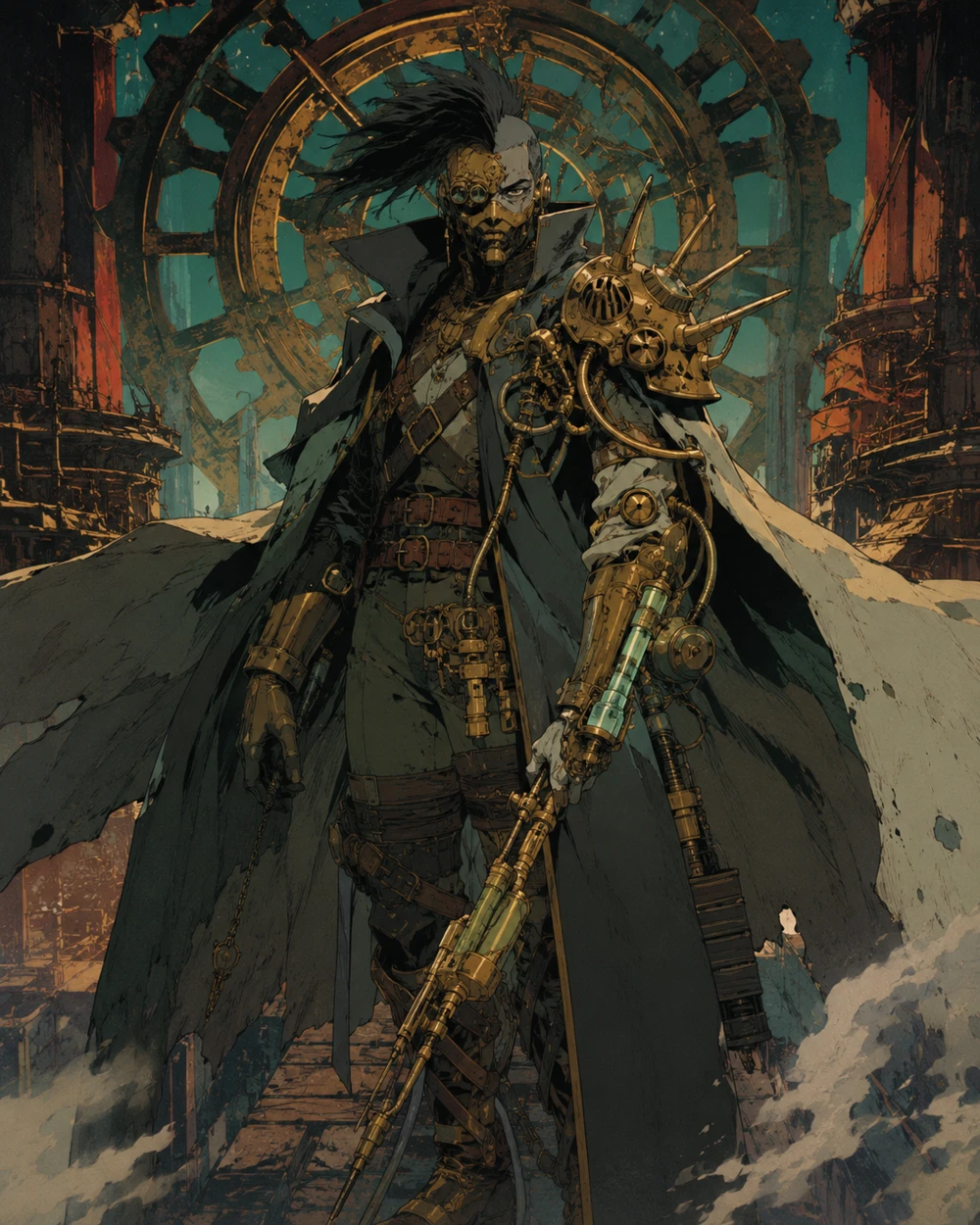
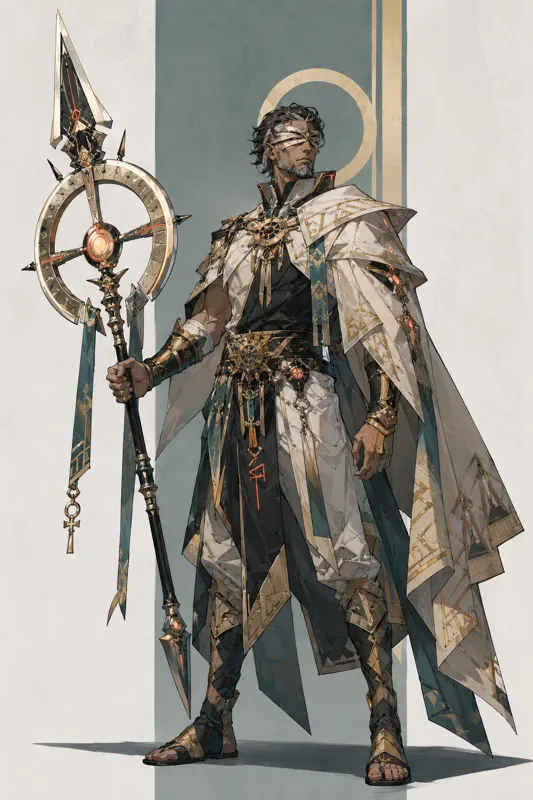
Principal characters

Ahk Ra, the Walking Star
Ahk Ra — pharaoh-style appearance concept
Ahk RaPharaoh-style appearance concept — Ahk Ra remains unseen in storyTO-2201
Pharaoh, Ara’Kai line (the Solar current of Book IV) · Never seen; shadow, footprints, glass earth
Nefer-Tahi (provisional)
Nefer-Tahi — Proposed casting — identity / age details unverified
Nefer-TahiProposed casting — identity / age details unverifiedTO-2499
Pharaoh, Ara’Kai cousin line; royal embalmer · Watches a cousin become something the registries have no word for
Itzel Cuauhtli (provisional)
Itzel Cuauhtli — Proposed casting — identity / age details unverified
Itzel CuauhtliProposed casting — identity / age details unverifiedTO-2396
Sun-Serpent Circle astronomer · First reads the eclipse omen from the Temple of Nine Suns
Custodian Hemreth (provisional)
Custodian Hemreth — Proposed casting — identity / age details unverified
Custodian HemrethProposed casting — identity / age details unverifiedTO-2424
Pharaoh relic-keeper · Takes the vow; founds the vault-city and the Eclipse Registry; first holder of the office Aurel later inherits
Pharaoh Ankh-Seret (provisional)
Pharaoh Ankh-Seret — Proposed casting — identity / age details unverified
Pharaoh Ankh-SeretProposed casting — identity / age details unverifiedTO-2018
Pharaoh, the consolidating sovereign · Breeds and blesses the royal lines; Ahk Ra’s patron
The clerk, Dami (provisional)
Dami — Proposed casting — identity / age details unverified
DamiProposed casting — identity / age details unverifiedTO-2131
Pharaoh, Registry scribe · Leaves the first bloodline entry blank
Envoys of six Elohim orders
Envoys of six Elohim orders — Proposed casting — collective reference
Envoys of six Elohim ordersProposed casting — collective referenceTO-2173
Elohim · Arrive to canonize, contain or kill; cannot agree
The Anubian Warden
The Anubian Warden — Proposed casting — identity / age details unverified
The Anubian WardenProposed casting — identity / age details unverifiedTO-2073
Sentinel · Keeper of the Solar Tomb; receives the throne with no body

Movement One — The Consolidation

Movement Two — The March

  • 7. One Day Late. Nefer-Tahi follows the campaign. A settlement erased; a human-shaped shadow burned into stone. She arrives the morning after, every time.
  • 8. Footprints. A road of vitrified footprints that stay hot. Villagers bridge it rather than claim it. She tests one with a palm and cannot sleep for a week.
  • 9. The Envoys. Six Elohim orders send representatives. Canonize, contain, kill. They argue in the throne room while the sovereign who made him listens.
  • 10. Itzel’s Journey. The astronomer travels north to warn the Dominion that the eclipse is a schedule, not an omen. The Jackals-to-be will later keep her charts.
  • 11. Ash and Sun. Nefer-Tahi reconstructs, from the embalmed dead, what her cousin is doing: Solar Authority, Ashen absorption, Veil resonance in one vessel. The maxim is spoken for the first time, by her: never allow the blood of the Sun to join the blood of Ash.
  • 12. The Glass Corridor. A winding corridor of fused earth. Early investigators chart it for residents’ safety. The pattern suggests terrifying control, not indiscriminate ruin.
  • 13. The Empty Case. Hemreth is ordered to prepare a vault for whatever can be recovered. He builds a case before there is anything to put in it.

Movement Three — The Custody

  • 14. The End of the March. Off the page. Death, crossing or division; the three POVs hear three accounts and the book commits to none. The shadow stays burned in the stone.
  • 15. Vanishing. Surviving Ara’Kai lines go into secrecy. Nefer-Tahi embalms a throne with no body for the Valley of Crowns and hands it to the Anubian Warden.
  • 16. The Ash Meridian. A border drawn across the Dominion. On one side, Solar. On the other, forbidden.
  • 17. The Vow. Hemreth founds a vault-city and an Eclipse Registry. His oath: guard what can destroy the world, but never forget what guarding can turn you into. The office he founds will outlive the oath.
  • 18. The Mantle. The Pharaoh’s Mantle sealed in Hemreth’s vault. It does not warm again for a very long time.
  • 19. The Blank Line. Dami, first clerk of the Registry, leaves an infant’s bloodline entry unfinished while a search detail passes outside. Resistance no larger than a blank line.
  • 20. Itzel’s Chart. Coda. The Sun-Serpent temple files her eclipse tables in a reliquary. Centuries on, Aurel Goldfang will show a young oracle one prophecy from it. The last image is the empty case, dusted.

Carry-forward

The Reliquary prophecy, the Eclipse Registry, the empty case reserved for “the kid with the blue fire”, the empty throne hall civilians keep without worshipping, and the fear that reads Riven’s pulse as an alarm all originate here. The office-not-blood ruling means Aurel’s provenance file on Riven is institutional memory, not inheritance.

Book IXRed AutumnA Name Is Only a Handle
A king discovers the forbidden third fact, that the flow can be reversed, and spends himself in exactly the order he chooses; a kingdom of forty thousand follows the cries of lost cubs into the red and leaves only lanterns.
Era
The Long Peace, in a mountain dynasty and a Kynari kingdom.
People
A sovereign court; the Kynari of the Red Autumn; the Hollow Family in residence.
Canon lock
Veilfeeding; the King Who Fed; the Kneeling Realm; the Red Autumn; the place setting that is eleven months older than Riven.

POV

Two novels in one binding, told in alternation. The court half follows the king’s chronicler, who is being written out of his own record as the king feeds. The Kynari half follows a Many-Pelt matriarch during the Red Autumn, who hears her cubs calling from the Crimson Veil and knows, and goes anyway.

Shape

  • 1. The Shaft — Mines break into a Crimson Veil. The king builds a second throne room around it. The servants’ names go first, then the court; the chronicler notices he no longer knows his colleagues and keeps writing.
  • 2. The Queen’s Face — The kingdom does not get consumed. It kneels, flags still flying, the only nation ever to fold itself into the Veil voluntarily. The Hollow Family, homeless since the Crossing, takes residence: the Mother as queen-mother, the Observer as chronicler (the real one is replaced in his own chair), the Father at the borders, the Lantern as a chandelier-sun, the Twins’ ten thousand courtiers each believing they are the king.
  • 3. The Red Autumn — Across the realms, the matriarch’s people vanish without battle. Some of the lanterns in the court are new. The king, last, willingly gives up his own name: it is only a handle by which others may grab you. His signatures are blank. His portraits are smooth ovals.

Closing image

The court’s oldest ritual: one empty place at the high table, dressed in dusk-gold, for a guest the king insists is coming. The chronicler, who no longer has a name, dates the entry. It is eleven months before a child in the Pharaoh Realm runs a fever.

Plants

The only Red Zone with a throne, and therefore intent; the eclipse-marked Client’s refusal of commissions that route through here; the invitation whose season is still an open ruling.

Full outlineSpine, principal characters, chapters

Spine

Two novels in one binding, alternating chapter by chapter: a court that feeds itself to the Veil in the order its king chooses, and a Kynari kingdom that follows its lost cubs into the red. The thesis is the Wicked King’s own line, turned inside out: a name is a handle by which others may grab you, and the book shows what a people becomes when nobody can be grabbed.

Ruling applied: the closing entry is dated eleven months before Riven’s birth. The place setting is older than the child, not older than his Awakening.
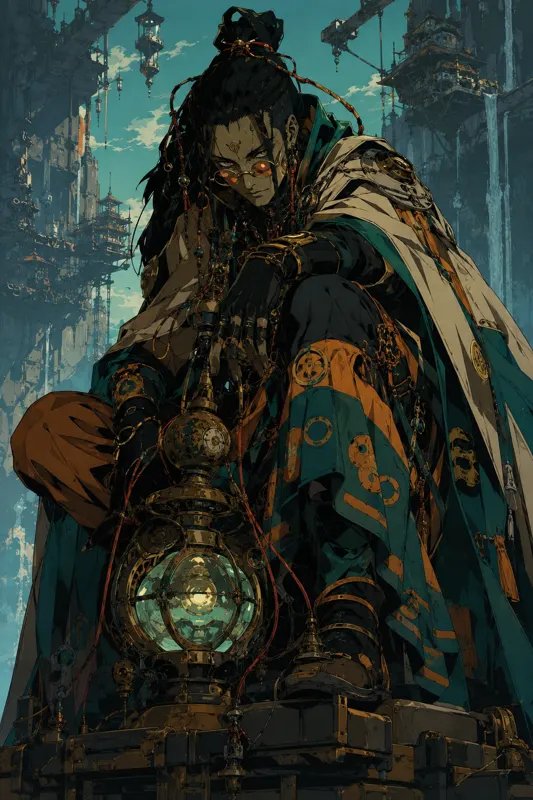
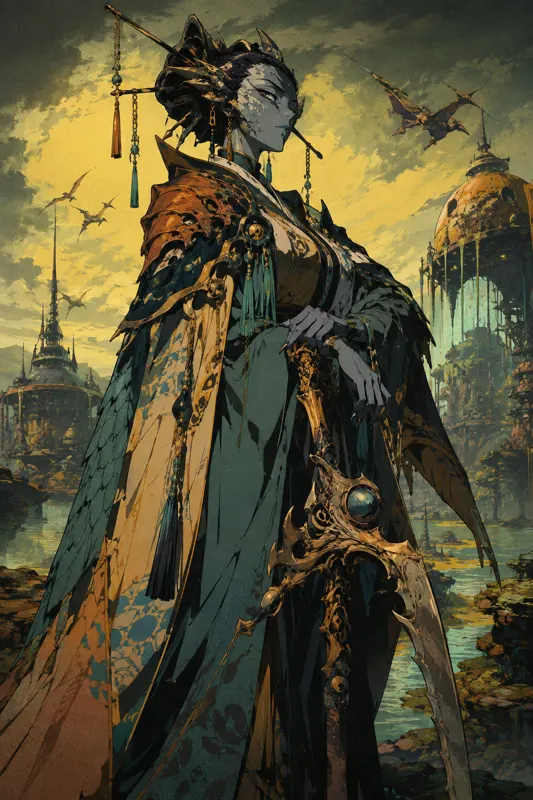
Principal characters

The King (name given in Chapter 1, lost by Chapter 18)
The King — Proposed casting — identity / age details unverified
The KingProposed casting — identity / age details unverifiedTO-1943
Court · Builds a second throne room around the shaft; feeds in chosen order
Tovan Resh (provisional)
Tovan Resh — Proposed casting — identity / age details unverified
Tovan ReshProposed casting — identity / age details unverifiedTO-1951
Court · Royal chronicler; written out of his own record; replaced in his chair by the Observer
Queen Ysolde (provisional)
Queen Ysolde — Proposed casting — identity / age details unverified
Queen YsoldeProposed casting — identity / age details unverifiedTO-1944
Court · Her face is the second-to-last thing spent
The Mine-Master Orrel (provisional)
The Mine-Master Orrel — Proposed casting — identity / age details unverified
The Mine-Master OrrelProposed casting — identity / age details unverifiedTO-2550
Court · Breaks into the Crimson Veil; first to recognize what the shaft is
Matriarch Hesska of the Many Pelts (provisional)
Matriarch Hesska of the Many Pelts — Proposed casting — identity / age details unverified
Matriarch Hesska of the Many PeltsProposed casting — identity / age details unverifiedTO-2330
Red Autumn · Hears her cubs from the Veil and knows, and goes
Dren (provisional)
Dren — Proposed casting — identity / age details unverified
DrenProposed casting — identity / age details unverifiedTO-1955
Red Autumn · Hesska’s eldest; the last to follow; the one lantern that is “new”
The Hollow Family
Hollow Mother — Proposed casting — identity / age details unverified
Hollow MotherProposed casting — identity / age details unverifiedTO-1961
Hollow Father — Proposed casting — identity / age details unverified
Hollow FatherProposed casting — identity / age details unverifiedTO-1963
The Observer — Proposed casting — identity / age details unverified
The ObserverProposed casting — identity / age details unverifiedTO-1964
The Lantern — Proposed casting — identity / age details unverified
The LanternProposed casting — identity / age details unverifiedTO-1973
The Twins — Proposed casting — collective reference
The TwinsProposed casting — collective referenceTO-1974
Both strands · Mother, Father, Observer, Lantern, Twins; named in Book V; take residence here
Agent Imre (provisional)
Agent Imre — Proposed casting — identity / age details unverified
Agent ImreProposed casting — identity / age details unverifiedTO-1987
Frame · Nomad Horizon-5 surveyor; files the addendum: the only Red Zone with a throne

Movement One — The Shaft

Movement Two — The Queen’s Face

Movement Three — The Last Name

  • 14. Court. Ten thousand masked courtiers, each privately certain he is the king: the Twins’ masterwork. Tovan is given a mask.
  • 15. Court. Some of the lanterns are new. The Observer notes the Red Autumn file in a chronicler’s hand that is no longer Tovan’s.
  • 16. Red Autumn. Abandoned homes and lanterns. The Kynari Migration Bell rings once for a realm that is no longer biologically there.
  • 17. Court. The queen’s face is spent. The king chooses the order; the Veil lets him. He keeps his own name for last and keeps it longest.
  • 18. Court. Willingly, the king gives up his name. His signatures go blank. His portraits smooth to ovals. Maps hold one heading: the Realm of the Wicked King.
  • 19. The Throne. What sits on it: the first Sovereign-shaped hole, a king-outline with nothing inside but appetite and etiquette. He remembers only that he is owed something.
  • 20. The Place Setting. The court’s oldest ritual: one empty place at the high table, dressed in dusk-gold, for a guest the king insists is coming. The chronicler, who no longer has a name, dates the entry. Eleven months later, in another realm, a child is born who will one day run a fever.

Frame

Agent Imre’s Nomad addendum opens and closes the book: Horizon 5+, DO NOT ENTER, the only Red Zone with a throne and therefore with intent. If you hear an invitation, you are already inside.

Carry-forward

The eclipse-marked Client refuses commissions that route through here; a banquet-note may lie beneath Amelia’s Ninth Cup; the season that hosts the invitation remains the one ruling this book leaves open on purpose.

Book XPale ChoirThe Address Is Closed
A people whose first law forbids aiming a protection watch their students hire their masterwork out for pruning contracts, and discover that the only lawful war is to close the door.
Era
About 300 years before the Awakening, the Age of Concealment Cultures.
People
The Lunari; the human Moon-Ward lineages; the Blood Sovereign Clan at the Crimson Divide; Vael’Thyr before the First Veil Collapse.
Canon lock
The Pale Choir woven by gift and re-bound as a weapon; the Lunari Withdrawal; the Crimson Divide; Vael’Thyr consumed.

POV

Loom-Mother Ysalen, young (the codex gives her about 900 years in the present; here she is a weaver who has just finished her first guardian-spirit). A human Moon-Ward route-warden, ancestor of the Veyr line, who signs the first pruning contract and believes it is mercy. A brief Blood Court thread: Christina Alistair handing Adair a crimson bookmark at the unlocked gate. A single chapter in Vael’Thyr: a child named Elara draws a door in a shaking hand.

Shape

Set pieces

The Choir’s first song, sung for a caravan in the dark; the jammed loom; a tapestry-hall sealed with the complete, unedited record inside.

Plants

The Lunar Triad (S4 Arc XVIII) as the oath this book breaks; Seth and Anubis as ancient Lunari companion-work; the Moon-Ward burial ledgers that become the Buriers’ Ledger; Elara Ashveil, 183 and overdue, in Vashkarath.

Full outlineSpine, principal characters, chapters

Spine

The Lunari’s first law is that a woven protection may never be aimed. The book asks what a people does when the only honest response to a wrong is a war they are forbidden to fight, and answers with the Withdrawal: they close the address. Three cultures fall or split in the same season (Lunari, Blood Sovereign, Vael’Thyr), so the book reads as the Age of Concealment Cultures beginning all at once.

Rulings applied. Christina Alistair is on the page in the Blood Court thread. A seamstress lineage is seeded among the human Moon-Wards as the counter-force Storyline 5 lost in the Lyra rework: the family that stitches wards into cloth rather than weaving guardian-spirits, and refuses the pruning contract.
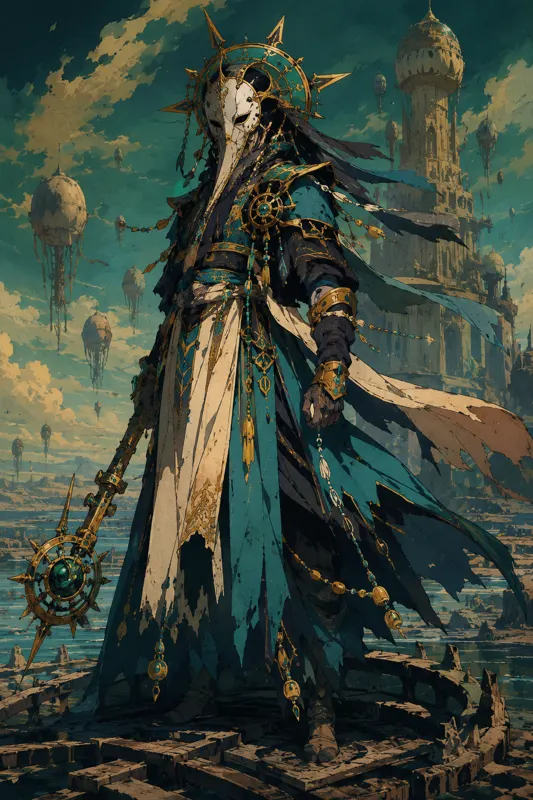
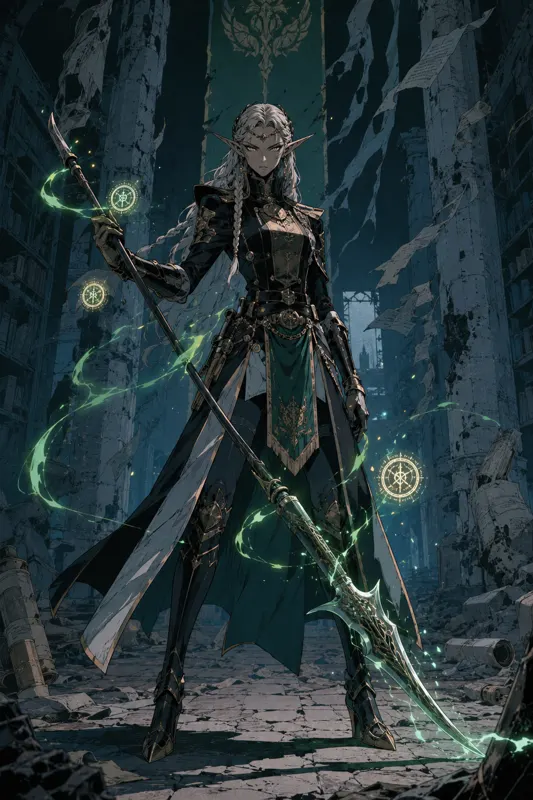
Principal characters

Ysalen (later Loom-Mother)
Loom-Mother Ysalen — Proposed casting — identity / age details unverified
Loom-Mother YsalenProposed casting — identity / age details unverifiedTO-1970
Lunari · Young weaver; finishes her first guardian-spirit; the loom that jams is hers
Orlan Silverstitch (provisional; Wren’s ancestor)
Orlan Silverstitch — Proposed casting — identity / age details unverified
Orlan SilverstitchProposed casting — identity / age details unverifiedTO-2005
Lunari · Warder; gifts the first warder’s stitch to a human family
Route-Warden Caspian Veyr (provisional)
Route-Warden Caspian Veyr — Proposed casting — identity / age details unverified
Route-Warden Caspian VeyrProposed casting — identity / age details unverifiedTO-1988
Human Moon-Ward · Signs the first pruning contract believing it mercy; Veyr ancestor
Elder Morwenna (provisional)
Elder Morwenna — Proposed casting — identity / age details unverified
Elder MorwennaProposed casting — identity / age details unverifiedTO-1991
Human Moon-Ward · Re-binds the Pale Choir as a weapon
Ines Threadwell (provisional)
Ines Threadwell — Proposed casting — identity / age details unverified
Ines ThreadwellProposed casting — identity / age details unverifiedTO-2044
Human Moon-Ward seamstress · Refuses the contract; founds the stitched-ward line (Storyline 5 counter-force)
Christina Alistair
Christina Alistair — Proposed casting — identity / age details unverified
Christina AlistairProposed casting — identity / age details unverifiedTO-2525
Blood Sovereign Clan · Gives Adair the crimson bookmark at the unlocked gate
Adair Tempus
Adair Tempus — Established codex reference
Adair TempusEstablished codex referenceCODEX1-15
Blood Sovereign Clan · Age 20; walks out with the Crimson Exodus
Leonard Osmon
Leonard Osmon — Proposed casting — identity / age details unverified
Leonard OsmonProposed casting — identity / age details unverifiedTO-2088
Blood Sovereign Clan · Exodus elder
Tiamayus Devani, Cyra Malaya
Tiamayus Devani — Proposed casting — identity / age details unverified
Tiamayus DevaniProposed casting — identity / age details unverifiedTO-1990
Cyra Malaya — Proposed casting — identity / age details unverified
Cyra MalayaProposed casting — identity / age details unverifiedTO-1979
Blood Sovereign Clan · Dominion and Renewal, the other two ways of the Divide
Elara (child)
Elara — Established codex reference
ElaraEstablished codex referenceCODEX1-16
Vael’Thyr · Draws a door she hasn’t opened in a shaking hand; takes the road-name Ashveil

Movement One — The Gift

  • 1. Pools. The Hollows where moonlight pools. Ysalen at her loom finishing her first guardian-spirit. The loom jams on a lie her apprentice tells; it is a joke in the Hollow.
  • 2. Travelers. A human traveling family (the Veyrs’ forebears) taken in and taught the second-light trades. Caspian as a boy learns to map a moonroad.
  • 3. The Stitch. Orlan Silverstitch gifts a human seamstress, Ines Threadwell’s grandmother, the warder’s stitch. The seed of the stitched-ward line.
  • 4. Sanguine. In the Blood realms, Adair at 19 reads every book in the Sanguine Archive and suspects more than one language. Christina Alistair is the only one who finds that interesting rather than alarming.
  • 5. The Choir. The Lunari weave the Pale Choir, a whole choir of guardian-spirits, and bind it by gift to protect the Moon-Ward routes. Its first song is sung for a caravan in the dark.
  • 6. Vael’Thyr. An Elder-Wilds civilization older than the Elven Archives. A child named Elara draws a door in a shaking hand. Her first walking year.
  • 7. Contracts. The human Moon-Ward elders discover that protection can be sold. Elder Morwenna drafts the first pruning contract.

Movement Two — The Contract

Movement Three — The Withdrawal

  • 15. Forbidden Grief. The Lunari council: they may not aim even their grief. War is impossible. Something else is not.
  • 16. Closing the Address. Hollows fold. Teaching stops. Orlan leaves one stitch behind, on a human door. Ysalen seals the tapestry-hall with the complete, unedited record inside.
  • 17. Ashveil. Elara takes the road-name under Charter §9 and seals her true family name: banked, not secret. She walks out.
  • 18. What the Students Forget. A generation on, Caspian’s children do not remember there were ever teachers. The Veyr visual language is Lunari craft with the attribution worn off.
  • 19. The Ledgers. The Moon-Ward order begins taking burial contracts. The first ledger entry is in Caspian’s hand. The Buriers’ Ledger starts here.
  • 20. Three Doors. Coda across three realms: a jammed loom in a folded Hollow; a crimson bookmark riding an empty page; a feather mantle molting at a site its wearer vows to return to.

Carry-forward

The Lunar Triad (S4) re-swears the oath Chapter 9 breaks; Seth and Anubis are Lunari companion-work of the kind Chapter 5 shows; the Threadwell line is now available to Storyline 5 as the seamstress counter-force and First Needle holder, pending ratification of the name.

Book XINine SunrisesHe Had Nothing We Could Steal
A swordsman and a scythe-and-needles fighter become the two most famous Nomads alive by refusing, each in their own way, to destroy anything, and then have a child who rings a kingdom like a bell.
Era
The generation immediately before the Awakening; ends at Riven, eleven months old.
People
The Nomad Alliance; the Null Legion; the Pharaoh Realm’s low quarter.
Canon lock
The Man Who Returned Whole; the Hollow Mother’s verdict; She Simply Walked; the nine-day hold and the hundred thousand tokens; the odachi’s dull spot stitched into a linen charm; the four-second pulse.

POV

Khari and Amara in alternation, with a third strand for the recon unit that enters the Crimson Veil with him and does not come back whole. The book is the cycle’s only one with a conventional romance, and it is the book where the Nomad Oath is finally said by someone the reader has watched earn it.

Shape

  • 1. The Red — An elite recon unit enters a Crimson Veil. Only Khari returns unchanged, every name and regret intact; the Mother herself speaks: he had nothing we could steal. Months of memory verification. He carries the tags of every fallen Nomad and recites the names each year. The reader learns, before the Nomads do, why: he has already accepted every triumph and failure in his life. There are no loose threads.
  • 2. The Ash — Amara crosses a battlefield empty-handed; pale ash resonance spreads from her footsteps and the Null Legion sets down its weapons and sleeps. She asks only for water and a chair and stays until the last soldier wakes. The two meet as legends who find each other’s legends embarrassing.
  • 3. The Nine Days — Heaven presses on a crossing; Khari holds it for nine sunrises while a hundred thousand pass; the final closing cut leaves a permanent dull spot on the odachi. He removes one steel curl; Amara stitches it into the linen charm of a child not yet born.

Closing movement

The low quarter of the capital. A fever. Ash, heat, walls bowing. Four seconds of blue flame cross the city and every relic lights, including the sealed Mantle. Water, tools, awnings and birds answer. Three separate observers log the impossible signal. The Halo Engine speaks the plan: flee to Earth’s shallow Anima, bank the forge, seed a decoy chase. The last line is the first line of Book Zero.

Plants

Everything. The flame charm restitched at age nine; Darius Eventide; the phantom sightings of the Long Chase; the Jackals’ blank-space deduction; the father’s lesson that is load-bearing for the whole saga: know who you are before the Veil decides for you.

Full outlineSpine, principal characters, chapters

Spine

The keystone’s keystone. Two Nomads become the most famous people alive by refusing to destroy anything, fall in love while finding each other’s legends embarrassing, and have a child who rings a kingdom like a bell. The book’s load-bearing line is Khari’s lesson to his son, spoken here first to himself: know who you are before the Veil decides for you.

Ruling applied: the final chapter and Book Zero’s opening are the same scene from two sides. Book XI ends inside the nursery with the parents; Book Zero opens with the city hearing it. Neither chapter is complete without the other.

Locked visual canon for Khari and Amara is honored by staging their feats through consequence: the empty chair, the refilled pitcher, the hundred-thousandth token, the dull spot on the blade.
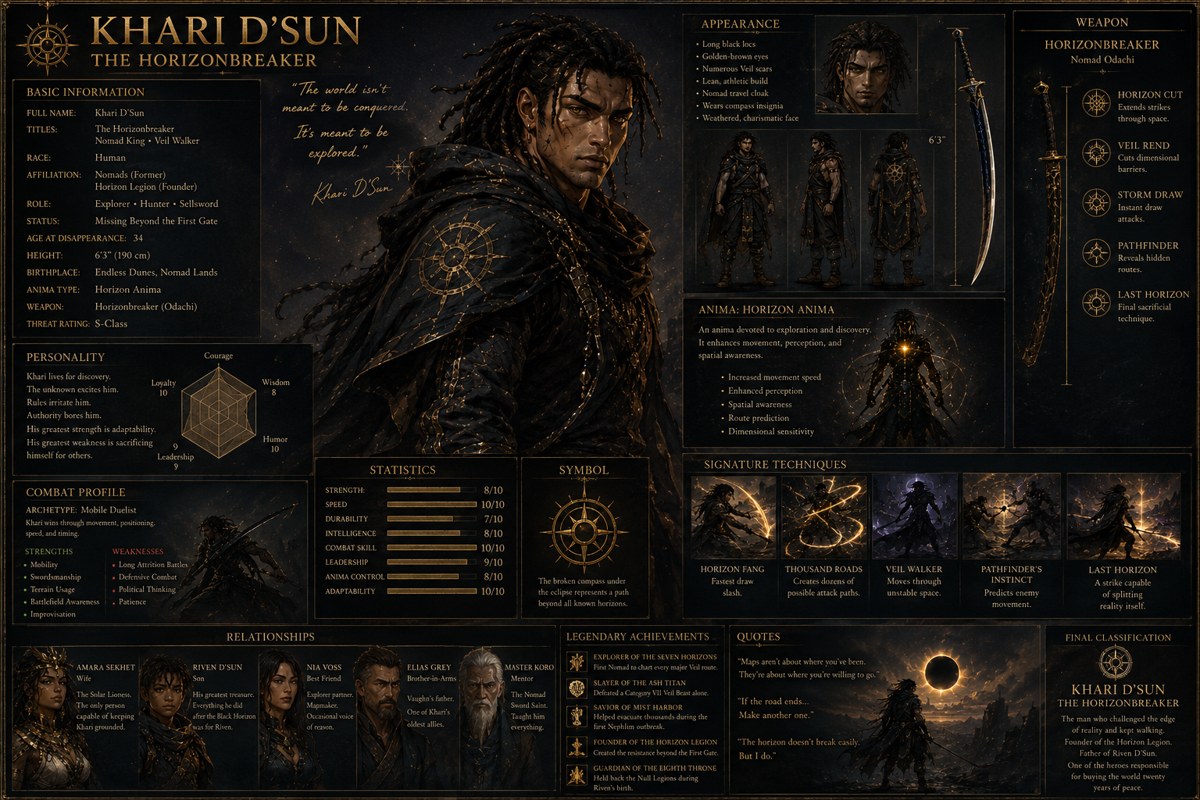
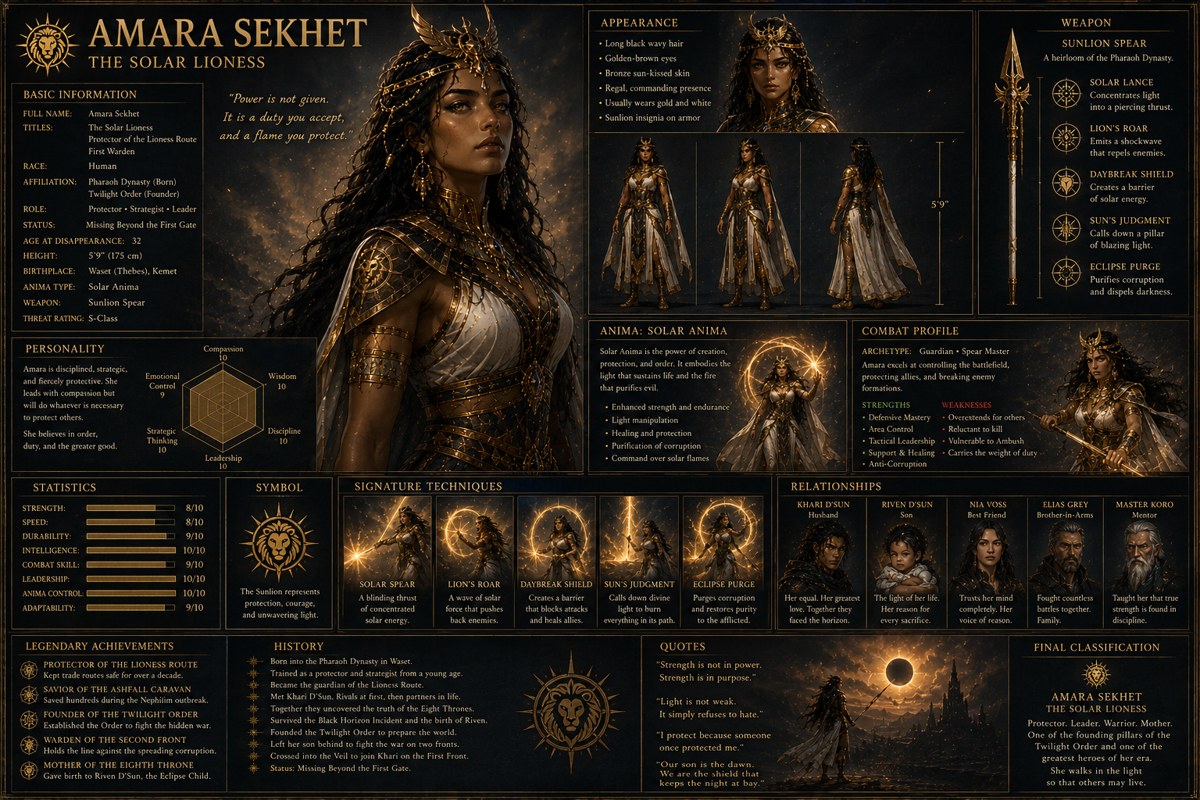
Principal characters

Khari
Khari — Existing named dossier
KhariExisting named dossierTO-0896
Nomad swordsman; the Man Who Returned Whole; the Man Who Held Back Heaven · Odachi: staff-length, guardless, obsidian blade, eclipse-plasma core
Amara
Amara — Existing named dossier
AmaraExisting named dossierTO-0894
Nomad; the Mother of Ash; scythe and needles · She Simply Walked
Serjeant Vey Ondrak (provisional)
Serjeant Vey Ondrak — Proposed casting — identity / age details unverified
Serjeant Vey OndrakProposed casting — identity / age details unverifiedTO-2347
Khari’s recon unit leader · Enters the Crimson Veil; returns as someone else
Tamsin (provisional)
Tamsin — Proposed casting — identity / age details unverified
TamsinProposed casting — identity / age details unverifiedTO-1993
Recon unit; youngest · Returns as the Veil Lost; Khari carries her tag
Darius Eventide
Darius Eventide — Proposed casting — identity / age details unverified
Darius EventideProposed casting — identity / age details unverifiedTO-1994
Nomad; later Riven’s mentor · Introduced as Khari’s friend and the verification officer who clears him
Grandfather Khari & the grandmother (names per Book Zero)
Ahkem D’Sun — labeled grandfather on Riven family reference sheet
Grandfather KhariSource-sheet name: Ahkem D’SunExisting labeled grandparent artwork from Riven’s folderRIVEN-0430
Meriten D’Sun — labeled grandmother on Riven family reference sheet
Grandmother KhariSource-sheet name: Meriten D’SunExisting labeled grandparent artwork from Riven’s folderRIVEN-0430
Khari’s parents; the antiquities shop · The Khari & Sons line from Book VII
The Halo Engine
The Halo Engine — Proposed casting — identity / age details unverified
The Halo EngineProposed casting — identity / age details unverifiedTO-1883
Oracle · Speaks the plan at the end
Commander Ashgrave (provisional)
Commander Ashgrave — Proposed casting — identity / age details unverified
Commander AshgraveProposed casting — identity / age details unverifiedTO-2001
Null Legion battalion commander · The last soldier to wake
Aurel Goldfang
Aurel Goldfang — user-confirmed reference sheet
Aurel GoldfangUser-confirmed Aurel Goldfang referenceUSER-AUREL-001
Gilded Jackal, Tier 4 · One chapter: a curator reading three observers’ reports

Movement One — The Red

  • 1. Tags. Khari before the Veil, counting identification tags on a cord. The reader does not yet know why he counts.
  • 2. The Unit. Ondrak’s elite recon unit briefed on a Crimson Veil that has swallowed two settlements. The Nomad Oath spoken at the edge; Tamsin says it wrong and laughs.
  • 3. Inside. Loved ones calling. Hours lost. Shadows moving independently. Khari hears his mother and knows she is alive and at home, so the voice has nothing to hold.
  • 4. The Mother. The Hollow Mother speaks to him directly. The reader learns what the Veil feeds on: unresolved identity. Khari has accepted every triumph, regret, failure and responsibility of his life. He had nothing we could steal.
  • 5. Out. One returns unchanged. Ondrak returns as someone else. Tamsin does not return.
  • 6. Verification. Months of memory checks run by Darius Eventide. The chapter is the two of them in a room, every childhood memory, every name, until the Nomads agree he came back.
  • 7. The Names. The first anniversary. Khari recites every fallen Nomad’s name. He will do it every year.

Movement Two — The Ash

  • 8. Amara. A Null Legion battalion advances on a civilian square. Amara crosses the battlefield empty-handed; pale ash resonance spreads from her footsteps. The soldiers set down their weapons and sleep.
  • 9. Water and a Chair. She asks for both and stays, ankle-deep in ash, until the last soldier wakes. Commander Ashgrave opens his eyes to an empty chair and a refilled pitcher.
  • 10. Legends. Khari and Amara meet at the Crossroads. Each has heard the other’s story. Each finds the other’s story embarrassing. The romance is two people relieved to be ordinary in one room.
  • 11. The Shop. Khari & Sons. Grandfather, forge, antiquities. Amara learns the needles were her mother’s; Khari learns the odachi was nobody’s.
  • 12. Aurel. A curator in a vault-city reads nothing about either of them yet. The chapter is here so the reader feels the Registry breathing.
  • 13. The Charm. Amara stitches a linen charm for a child not yet conceived. Khari says that is tempting fate. She says fate is a handle.

Movement Three — The Nine Days

  • 14. Heaven Presses. The Veil collapses toward a crossing with a hundred thousand people on the wrong side of it.
  • 15. Day One. Khari holds. Civilians build routines beneath the pressure: shelter, water, food, care.
  • 16. Day Five. Amara runs the evacuation ledger. Passage tokens counted. The reader never sees Khari’s face in this movement; only the cup waiting at the abandoned safe line.
  • 17. Day Nine. The hundred-thousandth token lands at dawn. The final closing cut. A permanent dull spot on the obsidian blade.
  • 18. The Thread. Khari removes one steel curl from the dull spot. Amara stitches it into the charm. The scar of his greatest stand becomes small enough for both of them to hold.
  • 19. Eleven Months. The low quarter of the capital. A child. A fever. Ash on the pillow, heat, walls bowing. Khari holds a sword like shaking its hand and the infant watches.
  • 20. Four Seconds. Inside the nursery: blue flame, the charm warm, the Mantle in a sealed vault somewhere lighting, and the two of them understanding at once that the chase has started. The Halo Engine’s voice: flee to Earth’s shallow Anima, bank the forge, seed a decoy. Last line is Book Zero’s first line, heard from inside the room.

Carry-forward

The charm restitched at age nine, Darius Eventide waiting in the shop, the phantom sightings, the blank space Aurel will one day deduce, and the Hollow Mother’s verdict that Riven will have to earn for himself.

Cross-Cycle Threads

Each present-day principal inherits from a specific book; a reader who finishes the cycle recognizes the cast’s powers as history before the cast does.

  • Riven (Solar current, Crown, Stardust) — Books IV, VIII, XI · Aru’Sahra Crown Reflex; the Walking Star fear; the four-second pulse
  • Gingey / Aethernox — Books I, III · The Name; the Stranger’s Mercy; Luxen’s archive
  • Yahia (Frost-Reaper lullaby) — Books IV, VI · Vael’Rime endure the Frozen Sea’s resonance; lullaby-keeping begins
  • Kaisel (Blood Courts) — Books IV, X · Sanghavar fluid control; the Crimson Divide and Adair’s bookmark
  • Arelion & Kirshino (Storm Mandate) — Books II, VI · Storm Sentinels; Vantari decentralization the Spire-Halls later betray
  • Scribs (Archive Mandate) — Books II, VI · Archive Sentinels absorbed into Elven Living Pattern; Sealed Memory
  • Vaughn (Mirage Mandate, Grey Meridian) — Books II, VI · Sera Meridian founds the city that will make him a citizen
  • Asha (Witness Mandate) — Books II, VII · Witness Sentinels; the Equal Scale and the Law of Witness
  • Amelia (Seam Titan) — Books II, VI · Titans that distributed Veil pressure; their fragments entering bloodlines
  • Sanaa (Funeral Mandate) — Books II, VII · “No soul left unnamed”; the first memory-verification rites
  • Nia (Forge Titan) — Books VI, VII · Forge Titans repairing Gates; Restoration dismantling the forges
  • Ixtli (Hunter Mandate, Sun-Serpent) — Books II, VIII · Rescue-trackers; the Temple of Nine Suns reading the eclipse
  • The Veyr sisters & the Lunari — Books III, X · Caelune packs; Moon-Ward instruction; the Pale Choir broken
  • Elara Ashveil — Book X · Vael’Thyr consumed; the child’s drawn door
  • Adair Tempus — Book X · The unlocked gate; Christina Alistair’s bookmark
  • The Gilded Jackals / Aurel — Books VII, VIII · Restoration custody inherited; the Eclipse Registry; the first blank line
  • The Hollow Family / Wicked King — Books V, IX · The Crossing; the Kneeling Realm; the place setting eleven months old
  • Pestilence — Books II, III, IV, VI · Named, fed by Correction on both sides of the Shift, swollen by Titanfall
  • Khari & Amara — Book XI · Everything Book Zero assumes

Canon Locks, Rulings, Production Order

Locks the cycle must not touch. Ahk Ra stays undesigned and unseen; his fate stays unresolved. Khari and Amara keep their locked visual canon, so their set pieces are staged through consequence (the empty chair, the hundred-thousandth token). The Hollow Family is never given a cure. Nobody arranges the cast. The Saurai are named Saurai.

Rulings, decided and applied in the full outlines

  • Book V — names the five (Marit, Dov, Halloran, Pell, Issa and Ilse; all provisional). The horror lands because the names can be taken.
  • Book IX — the closing entry is dated eleven months before Riven’s birth, not his Awakening.
  • Book X — keeps Christina Alistair on the page at the unlocked gate; Adair’s own mentor book picks her up from there.
  • Book XI — the final chapter and Book Zero’s opening are one scene from two sides: inside the nursery, then the city hearing it.
  • Book VIII — the first custodian founds the office Aurel later holds, not his bloodline. Aurel inherits a chair; his corruption of it is a choice.
  • Book X — seeds the Threadwell line (stitched wards, refuse the pruning contract) as Storyline 5’s seamstress counter-force and First Needle holder, replacing the orphaned Valequill thread. Name pending ratification.
  • The Saurai — get their own book (IV, The Continuance), parallel to the Kynari’s Book III; the cycle is eleven books.

Suggested production order

Write XI first: it is the keystone’s keystone, the cast’s parents are already locked, and it sells the cycle. Then I (Gingey is the franchise’s best-loved voice and the Kynari strand makes it a complete origin). Then VIII, which the Jackal build and the eclipse client both lean on. Then IV, because three leads’ bloodlines depend on it and it should be drafted before any of their mentor books. The remaining seven follow timeline order, with II and VII as the two that most need the Elohim and Pestilence codices open beside them.
▲ Top